

Wholesale Tamping Rammer Factories That Deliver Consistent Quality
2026-11-16
Walk through any equipment yard and you'll see the same story: a row of tamping rammers that were bought cheap and retired early. What's harder to spot is the factory discipline that keeps the next machine running for years. For wholesale buyers, that discipline is the only thing standing between profit and costly rework. Dynamic has built its name on exactly that kind of repeatable quality. Here's how to tell the difference before you sign the order.
How These Factories Keep Every Rammer Within Spec
A finished rammer doesn't leave the line just because it starts. Each one is run through a break-in cycle where stroke rate, impact energy, and shoe travel are logged against the factory's master settings. If a unit drifts by more than a few percent, it gets pulled and adjusted before it ever sees a pallet.
The real control happens earlier. Critical parts like the spring cylinder, guide rod, and foot plate pass through go/no-go fixtures at multiple stations. Torque values on the gearbox and engine mounts are recorded digitally, not left to feel. This catches the slow drift that turns a good design into an out-of-spec machine.
What separates the better plants is that the spec is treated as a range, not a target. Operators are trained to listen to each rammer's rebound during the first test run—an odd rattle or weak return sends it straight back. That kind of attention keeps the whole production lot tight, not just the sample units.
The Production Line Rituals That Preserve Impact Consistency
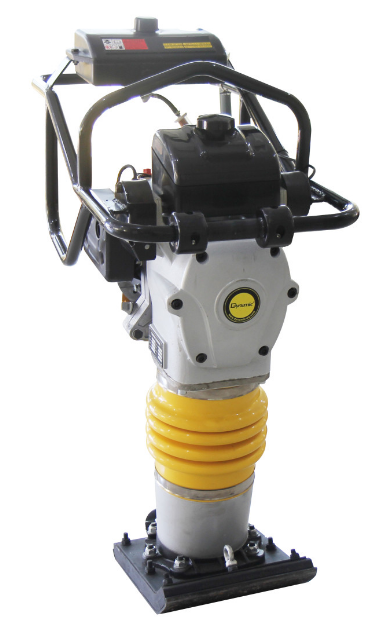
Every morning, before the first batch rolls through, the line supervisor walks the floor with a worn clipboard and a simple checklist. It’s not a digital dashboard or a complex audit—just a handful of physical checks: torque settings on the crimping machine, barrel temperature on the injection molder, belt tension on the conveyor. These small, repetitive gestures look almost ceremonial, but they’re the reason the 10,000th unit off the line feels exactly like the first. When no one skips the ritual, no one has to guess why a batch drifted out of spec.
In the middle of a shift, operators use a call-and-response rhythm to confirm material changes. One person reads the lot number and resin type from the hopper label; another verifies it against the work order and initials a paper log. It’s slower than scanning a barcode, but that friction is intentional. The spoken exchange forces attention, catches mismatches before they reach the mold, and builds a shared memory of what “right” looks like. Teams that keep this habit rarely find surprises during final inspection.
At the end of the day, the line shuts down in a fixed sequence: purge the hot runner, wipe the die faces, lower the guard, and tag any anomaly on a dry-erase board by the exit. That board isn’t for managers—it’s a handoff note between shifts. A scribbled “slight bloom on left cavity, watch first 20 shots” travels further than any automated alert. Because the next crew repeats the same opening ritual, they already know where to look. Consistency isn’t enforced by policy; it lives in these unglamorous, repeated moments that no one thinks to cut until they’re gone.
What a Wholesale Tamping Rammer Partner Should Refuse to Skip
A wholesale tamping rammer partner that skips load testing on every production batch is handing you a return-rate time bomb. Insist on vibration frequency checks, engine endurance runs, and shoe plate stress tests before any container leaves the dock. If the supplier hesitates to share a teardown sample or a dated test log, walk away.
The second item nobody should skip is a clear spare parts and service commitment. Cheap unit pricing means nothing when a broken air filter or worn bellows sidelines a customer for three weeks. Demand a binding agreement on fast replenishment of wear parts, local technician training, and a warranty that covers not just defects but also realistic field abuse.
Finally, refuse to overlook compliance paperwork and transit protection. A missing EPA or CE certificate can leave your shipment stranded at customs, while flimsy packaging invites bent handles and cracked fuel tanks. A serious partner will provide certificate copies before payment and use reinforced crates with rust-inhibiting wraps as standard practice.
Material Choices That Decide Whether a Rammer Holds Its Tune
The heart of a rammer's consistency lies in the steel alloy used for the striking face. Cheap cast iron rings like a dull thud and drifts out of pitch after a few hundred blows, while a properly heat-treated tool steel keeps its crystalline structure intact under repeated impact. The difference shows up on the jobsite as a rammer that either sings the same note all day or slowly goes flat by mid-afternoon.
Beyond the face, the guide sleeve material quietly sets the ceiling for how long the tune stays true. Bronze sleeves wear into an oval, letting the rammer wander and strike off-axis, which introduces a wavering harmonic that no amount of re-facing can fix. Switching to a hardened steel sleeve with a nitrided surface holds the alignment so tight that the impact note stays crisp, almost like a well-tuned bell that refuses to crack.
Then there is the handle and shock-absorbing collar. A solid hickory handle transmits the full vibration spectrum into your hands, but it also dampens the higher overtones that signal a healthy rammer. A composite handle with a tuned elastomer collar isolates the operator while letting the natural resonance of the head ring through clearly. In the field, that means the difference between a rammer that feels dead in your grip and one that still tells you, with every strike, exactly where it stands.
Why Batch Uniformity Shows Up on the Jobsite
On a commercial pour, the crew can usually spot a bad batch before the slump cone even comes out. The mud hits the chute in a different shape, or it moves a little slower through the hopper. That kind of visible shift doesn't happen by accident. It starts back at the plant, where a few seconds of mixing time, a slightly off moisture reading, or a worn-out gate on the aggregate bin can change everything downstream. When those small variances stack up, the result is a truckload that doesn't match the one before it, and the finishers are the first to feel it.
Concrete isn't forgiving when it comes to consistency. A mix that runs a little wet in one load and stiffer in the next forces the crew to adjust on the fly, adding water at the site or working the surface harder than they should. That's where batch uniformity stops being a plant issue and becomes a jobsite problem. The trowel machine bogs down, edges tear instead of cut clean, and the finished floor shows the story in color streaks or uneven texture. No one planned for that, but everyone pays for it.
The fix isn't about blaming the plant or the driver. It's about seeing the whole chain, from aggregate moisture probes to the mixer's blade wear, as one connected system. When that system drifts, the jobsite becomes the quality control lab, and that's an expensive place to learn about a bad batch. Uniformity shows up on the job because that's where all the earlier decisions finally meet reality, and the concrete doesn't hide anything.
Reading a Factory's Quality Habit Before You Place an Order
Most buyers check the sample room first. That's a mistake. The samples are polished by the same hands you'll never meet on the production line. Instead, walk the floor at an unexpected hour. Watch how workers treat rejected parts. If a stitching flaw gets tossed into a bin without a second look, that tells you more than any certificate on the wall.
Ask about their rework rate, but don't stop at the number. Ask where the rework happens. A factory that fixes defects at the end of the line is guessing. A factory that catches them at each station is measuring. You can see the difference in the line's rhythm: no piles of half-sewn pieces waiting for repair, no cart of "maybe okay" parts parked by the final inspection table.
FAQ
They typically have long-standing relationships with steel and engine suppliers, and they inspect incoming batches rather than relying on vendor certificates alone. This catches inconsistencies early, so the final product doesn't vary between orders.
Ask for batch production records or request a pre-shipment inspection of randomly selected units from the current run. Factories that track torque settings, weld quality, and engine performance per batch tend to be more transparent about their numbers.
Most will let you change the color, add your own branding, adjust the shoe size, or choose between Honda, Robin, or Lifan engines. Some also offer different handle configurations or vibration-dampening upgrades for specific markets.
For standard models, 20 to 35 days after deposit is common. If you need custom colors or a different engine, add another 10 to 15 days. Factories with local engine stock can often move faster than those that import engines after the order is placed.
At minimum, each unit should undergo a compression test, a short run-in test on the engine, and a check of the throttle response and idle stability. Well-run factories also test the fuel tank for leaks and inspect the rammer shoe for casting defects.
Yes, the better ones keep a dedicated spare parts inventory for at least two years after a model is discontinued. They usually ship wear parts like air filters, carburetors, and shoes with the main order, and they have a technical contact who can troubleshoot by video call.
Request the engine manufacturer's certificate, a factory quality control checklist for your order, and any export documents required by your country. Some factories also provide a certificate of origin and a pre-shipment inspection report without being asked.
They often modify the carburetor tuning and use different spring rates or guide bushings depending on the target altitude and soil type. During assembly, they check the alignment between the engine, bellows, and shoe, which directly affects vibration and user fatigue.
Conclusion
In a sector where the difference between a solid day's compaction and a costly rework often comes down to fractions of an inch, the best wholesale tamping rammer factories treat consistency as a non-negotiable rhythm rather than a final inspection checkbox. These manufacturers embed spec adherence into every station: operators use calibrated gauges not as occasional audits but as the only way a rammer leaves the floor. The shoe's stroke, the engine's governed speed, and the tamping plate's flatness are checked mid-run, not just at the end. One habit worth watching for is the refusal to skip the "hot test" after assembly—a brief, loaded run that reveals whether the impact energy has drifted from the blueprint. Materials matter more than most buyers assume; a rammer that holds its tune uses heat-treated steel in the spring cylinder and a ductile iron shoe, not a softer substitute that will deform after a hundred hours. Factories that care about batch uniformity also log each pour or forging heat, so two rams from the same shipment behave like twins, not distant cousins.
The real proof, however, shows up on the jobsite. When a crew can swap a rental rammer for a purchased one without adjusting the throttle, re-marking lift depths, or noticing a change in vibration feel, that's batch uniformity doing its quiet work. Before placing a wholesale order, a sharp buyer reads the factory's quality habit in the small things: how they store finished rammers, whether their test area has a worn section from daily use, and whether the QC manager can name the last three times a rammer was pulled off the line for a soft blow. A partner worth keeping refuses to skip the boring rituals—the daily torque check on the tamping plate bolts, the vibration signature log, the honest rejection bin that isn't hidden behind the paint booth. Those habits don't just deliver a spec sheet; they deliver a rammer that keeps its impact consistent from the first pass to the five-hundredth, and that's what separates a factory from a mere assembly point.
Contact Us
Contact Person: Annie
Email: [email protected]
Tel/WhatsApp: 8613391442963
Website: https://www.dynamic-eq.com