
Steel Pallet Manufacturer in China: Durable Solutions for Global Logistics
2026-06-15
In the fast-paced world of global logistics, every component of the supply chain must withstand immense pressure—literally. Steel pallets have emerged as a cornerstone for industries demanding strength, longevity, and reliability. Yet, not all manufacturers meet the rigorous standards required for international shipping and storage. Enter Lanyuda, a premier steel pallet manufacturer in China that redefines durability. With a focus on precision engineering and innovative design, Lanyuda provides tailored solutions that overcome the shortcomings of traditional wood and plastic pallets. Discover how their heavy-duty steel pallets are transforming logistics for businesses worldwide, one shipment at a time.
Built to Last: How Chinese Steel Pallets Withstand Extreme Logistics
In the brutal world of heavy freight, where wooden pallets splinter and plastic warps under pressure, Chinese steel pallets have carved a reputation for near-indestructibility. Their secret lies not in a single feature but in a deliberate engineering ethos that anticipates the worst a supply chain can throw at them—be it saltwater corrosion on a container ship, the crushing weight of stacked coils, or the relentless shudder of forklift impacts during cross-docking. The steel grades selected, often high-strength low-alloy variants, offer a sweet spot between rigidity and ductility, allowing the pallets to flex slightly under extreme loads rather than cracking. This inherent give, combined with robotic welding that ensures consistent joint integrity, transforms a simple platform into a backbone of logistics resilience.
Beyond material toughness, the survival of these pallets in extreme environments owes much to surface treatments that go far beyond basic paint. Hot-dip galvanizing is the standard bearer, creating a metallurgical bond with the steel that shrugs off scratches and weather exposure for decades. In recent years, advanced powder coatings and zinc-rich primers have also gained ground, particularly for applications involving chemical exposure or food-grade requirements. One often-overlooked factor is the design of drainage channels and open-beam profiles, which prevent water, debris, and corrosive fluids from pooling—a simple but critical detail when pallets shuttle between tropical humidity and freezing warehouse conditions. These measures ensure that even after years of rough handling, the pallets maintain their dimensional stability, a trait that automated storage and retrieval systems (AS/RS) depend on for error-free operation.
What ultimately sets Chinese steel pallets apart in extreme logistics is their ability to blend mass-production scalability with customizations that address niche torture tests. From pallets designed with reinforced fork pockets to survive the sideswipe of clueless forklift operators, to those with integrated anti-slip surfaces that keep cargo planted during sudden stops, the sector has evolved beyond one-size-fits-all. This adaptability means that a steel pallet bound for an oil rig supply chain, where it might be lifted by crane in gale-force winds, can be engineered with extra tie-down points and a thicker top deck without sacrificing the interchangeability that makes palletized logistics efficient. It is this marriage of brute strength, smart metallurgy, and field-driven refinement that keeps them circulating long after competitors’ products have been reduced to scrap.
Tailored Designs for Every Industry Need
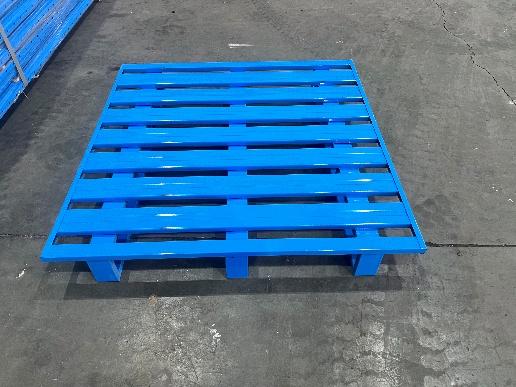
Every sector has its own rhythm and rules, and cookie-cutter visuals just don't cut it. We step into the specifics of your field—whether it's the sleek minimalism that fintech users trust or the vibrant energy that fuels a lifestyle brand—and build from there. Our process isn't about tweaking templates; it's about crafting a visual language that mirrors how your audience already thinks and behaves, making every pixel feel purposeful.
From the clean, authoritative layouts that healthcare providers need to the bold, scroll-stopping assets that give e-commerce an edge, we calibrate each element to match industry expectations without falling into cliché. Typography, color psychology, and interaction patterns are tested through the lens of real-world use cases, not hypothetical best practices, so the end result connects instantly and holds attention.
This isn't a one-size-fits-most solution with a fresh coat of paint. We immerse ourselves in competitive analysis, user research, and the unspoken rules of your niche to produce work that stands apart. The outcome is a design that doesn't just fit your industry—it reshapes how people see it, turning casual visitors into loyal advocates because the experience simply makes sense to them.
From Raw Material to Precision Engineering
The journey from raw material to precision engineering begins with a meticulous selection of base substances—metals, polymers, ceramics, or composites—each chosen for its inherent properties and potential. This is not merely about picking a grade off a shelf; it involves deep analysis of grain structures, thermal behavior, and impurity levels, often through spectrometry and microscopy. The aim is to root out any latent flaws that could later compromise micro-tolerances, ensuring the foundational integrity for intricate fabrication.
Once vetted, the material undergoes a series of transformative processes where traditional machining meets cutting-edge innovation. Multi-axis CNC systems, electrical discharge machining, and laser ablation carve away excess with sub-micron precision, while real-time adaptive controls compensate for tool wear and thermal drift. In some cases, additive methods like powder-bed fusion build components layer by atomized layer, enabling geometries that casting or forging could never achieve. Every operation is choreographed to preserve or enhance the material’s crystalline alignment and surface finish.
The final measure of success lies in the component’s ability to perform flawlessly under extreme conditions—whether in a jet engine’s turbine, a satellite’s orbital mechanism, or a surgical robot’s end effector. Here, precision engineering transcends dimensional accuracy; it embodies a synergy of material science, process physics, and quality metrology. Each finished piece is a testament to the seamless transition from raw elemental form to engineered perfection, where even a micron’s deviation is a canyon too wide.
Why Global Brands Trust Chinese Steel Pallet Manufacturers
Chinese steel pallet makers have quietly built a reputation for precision that meets the grueling demands of international supply chains. It’s not just about low-cost labor anymore—it’s the fusion of automated welding lines with hands-on quality checks that yields pallets with incredibly tight tolerances. A pallet that arrives warped or out of spec can halt an entire warehouse, and these manufacturers understand the high stakes. They’ve invested heavily in robotic production and real-time monitoring, ensuring every pallet can withstand repeated forklift impacts and heavy loads without deformation.
Price matters, but what really convinces procurement teams is the consistent value. Chinese factories benefit from a dense network of steel suppliers and a logistical efficiency that keeps per-unit costs low, yet they rarely cut corners on material thickness or protective coatings. Many brands find they can specify corrosion-resistant finishes or reinforced corners at a fraction of the cost quoted elsewhere, all while receiving batch after batch of identical quality. This reliability is critical when pallets are being shipped to multiple continents and must perform identically in humid ports or freezing warehouses.
Beyond the products themselves, the willingness to adapt has become a major differentiator. Global retailers often need custom sizes to fit automated storage systems, or unique color-coding for inventory management, and Chinese manufacturers respond without the bureaucratic delays that plague smaller suppliers. Design teams work around the clock to shift dimensions or add drainage holes, treating every tweak as routine rather than a special request. That agility, combined with straightforward communication and binding delivery schedules, transforms a supplier into a strategic partner—one that feels like an extension of the brand’s own operations rather than a distant vendor.
Cost Efficiency Without Cutting Corners
Real cost efficiency comes from smart resource allocation, not from slashing budgets blindly. It's about understanding where every dollar goes and making sure it works as hard as possible. This often means rethinking processes, renegotiating with vendors, or finding dual-purpose tools that solve multiple problems at once. The trick is to maintain—or even improve—quality while trimming the fat that slows you down.
Teams that pull this off tend to obsess over the difference between critical and nice-to-have. They invest heavily in automation and training where it reduces long-term waste, but they might choose simpler materials or open-source solutions for less visible areas. The result is a leaner operation that doesn't feel cheap to customers or employees—because the cuts happen out of sight, never in the parts that actually matter to the experience.
The Sustainability Edge of Steel Over Wood and Plastic
Steel stands apart from wood and plastic in its full lifecycle sustainability, primarily because it is the world’s most recycled material. Unlike wood, which involves deforestation and a lengthy regrowth cycle, or plastic, derived from finite fossil fuels and notorious for lingering in landfills, steel can be melted down and reformed endlessly without losing its inherent strength or quality. This closed-loop system drastically reduces the need for virgin raw material extraction, slashing mining impacts and energy consumption associated with production from scratch. In practice, today’s steel products often contain a significant percentage of recycled content, making them a tangible example of a circular economy at work.
Durability is another overlooked dimension of sustainability where steel excels. Wood structures are vulnerable to rot, pests, and fire, demanding chemical treatments that can leach into the environment and necessitate frequent replacement. Plastic degrades under UV light, becomes brittle, and can release microplastics into ecosystems. Steel, by contrast, withstands extreme weather, resists corrosion with modern coatings, and maintains structural integrity for decades with minimal maintenance. This longevity means fewer resources are consumed over a building’s or product’s lifetime—less material for repairs, less energy for remanufacturing, and lower overall waste generation.
The production footprint of steel is also evolving faster than that of its competitors. While primary steelmaking is energy-intensive, the rapid adoption of electric arc furnaces powered by renewable energy is decarbonizing the industry at a pace wood and plastic sectors struggle to match. Wood processing still relies heavily on fossil fuels for logging, transport, and milling, and plastic production remains locked into petrochemicals. Steel’s path to near-zero emissions is clearer and already underway, with green hydrogen breakthroughs and carbon capture investments further widening its sustainability advantage.
FAQ
Our pallets are made from high-grade structural steel, often with a hot-dip galvanized finish to resist corrosion. We also use stainless steel for specialized applications in food or pharmaceutical environments.
They have a consistent form factor that works well with automated systems, reducing jams and downtime. Plus, steel pallets are dimensionally stable, so they stack safely and maximize warehouse space.
Yes, we regularly adapt designs for sectors like automotive, cold storage, and heavy machinery. This includes adjusting dimensions, load capacity, adding anti-slip surfaces, or incorporating RFID tags.
We hold ISO 9001 certification and our welding processes meet AWS standards. Many of our pallets also pass stringent load testing and fire resistance checks as required by international freight regulations.
We maintain close relationships with major shipping lines and keep buffer stock of popular models. Production schedules are aligned with order forecasts, and we ship from multiple ports to minimize transit delays.
Steel pallets have a much longer service life, don't absorb moisture or harbor pests, and don't need fumigation for cross-border shipments. They also offer superior fire resistance and can handle heavier loads without breaking.
Conclusion
Chinese steel pallet manufacturers have redefined durability in global logistics, crafting solutions that thrive under the harshest conditions. From subzero cold storage to high-humidity maritime transport, these pallets resist warping, corrosion, and impact—thanks to advanced galvanization and robotic welding. Their resilience translates directly into fewer replacements and lower long-term costs for supply chains. Equally important is the ability to tailor designs to exact operational needs, whether accommodating automated retrieval systems, heavy machinery components, or delicate electronics. This bespoke engineering begins with carefully sourced steel, processed through precision cutting and forming lines that ensure dimensional consistency load after load. The result is a pallet that not only meets but often exceeds international safety and quality standards.
What truly sets these manufacturers apart is a deep commitment to value—balancing upfront affordability with lifecycle performance. Global brands increasingly turn to Chinese suppliers because they receive certified, traceable products that eliminate the risks of splintered wood or brittle plastic. Moreover, the shift toward steel supports circular economy goals: steel pallets are infinitely recyclable, reducing waste and avoiding the deforestation linked to timber alternatives. As companies face pressure to decarbonize logistics, the lighter weight and longer lifespan of steel units cut both emissions and costs per trip. By integrating lean production methods and continuous innovation, Chinese manufacturers deliver pallets that are not just tools of transport, but strategic assets for modern, sustainable supply chains.
Contact Us
Contact Person: Johnny
Email: [email protected]
Tel/WhatsApp: +86 18151010686
Website: https://lydstorage.com