

Professional Water Pump Generator Sets: Your Complete Guide to Reliable Power
2026-05-27
When the grid fails or you’re miles from the nearest outlet, a reliable power source isn’t a luxury—it’s a lifeline. Water pump generator sets have long been the unsung heroes of farms, construction sites, and emergency backup systems, quietly delivering the energy needed to keep water flowing and operations running. But not all generator sets are created equal, and choosing the right one can mean the difference between seamless productivity and costly downtime. At Hichai Power, we’ve engineered our water pump generator sets to tackle the toughest conditions with unwavering performance, blending robust design with fuel efficiency that seasoned professionals trust. Whether you’re irrigating remote fields or securing a backup for critical water systems, understanding what makes a generator truly dependable is the first step. In this guide, we’ll walk you through the essentials of selecting, maintaining, and maximizing your investment—without the marketing fluff. Let’s dive into the real-world factors that separate a workhorse from a headache.
Why Water Pumps Demand Their Own Power
Most household circuits are simply not designed to handle the sudden inrush of current that a water pump requires when it kicks on. Unlike a lightbulb or a fan, a pump motor needs a massive jolt of energy to overcome inertia and start moving water. Sharing a circuit with appliances like refrigerators or sump pumps creates a tug-of-war for available amps, often tripping breakers at the worst possible moment—like when you're standing in a half-filled shower.
Beyond nuisance trips, there's a more subtle electrical threat: voltage drop. When a pump shares undersized wiring with other loads, the voltage at the motor terminals can sag significantly during startup. This forces the motor to draw even more current to compensate, generating excess heat that slowly degrades insulation and shortens the pump's lifespan. A dedicated circuit with properly sized conductors eliminates this silent killer, ensuring the pump always receives the steady voltage it needs to operate efficiently.
Matching Your Pump to the Right Generator
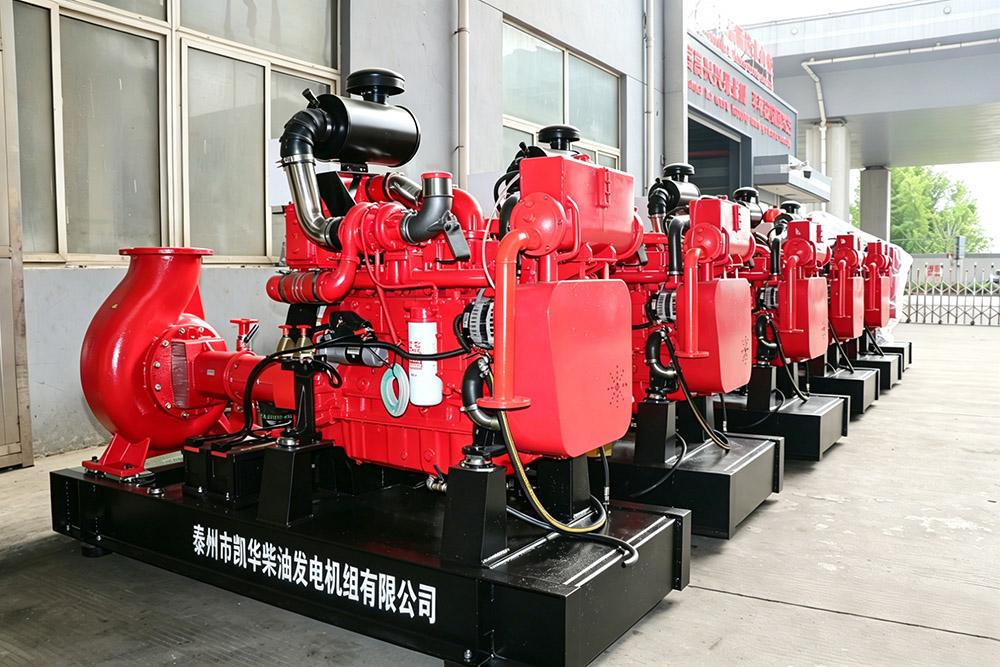
Choosing a generator that can actually handle your pump involves understanding the real electrical loads during startup. A pump's running wattage might seem modest, but the initial inrush current—often three to five times the normal draw—can trip breakers or stall a mismatched generator. Rather than just matching nameplate numbers, you need to ensure the generator's surge capacity comfortably exceeds the pump's locked-rotor amps, especially for deep well or high-head applications where the motor has to work hardest at startup.
Voltage drop over distance is another hidden gremlin that can undermine performance. Even if the generator is technically capable, long extension cords or undersized wiring between the generator and pump cause resistance, starving the motor of voltage precisely when it needs it most. This not only reduces starting torque but can cause overheating and premature wear. Always calculate the acceptable voltage drop for your specific cable length and gauge, and consider placing the generator as close as practically possible to the pump's power inlet.
Finally, pay attention to the generator's power quality. Some pumps, particularly those with electronic controls or variable frequency drives, are sensitive to harmonic distortion and frequency instability. A cheap construction-site generator may produce a choppy waveform that causes erratic behavior or control board failures. In such cases, an inverter generator with clean sine wave output is often a far better investment, delivering consistent power and quieter operation, while avoiding the headaches of nuisance trips and damaged electronics.
Field-Ready Features That Set Sets Apart
Any tool can look good in a controlled demo, but genuine reliability only reveals itself when it’s actually put to work. The features we’ve built aren’t just checkboxes on a spec sheet—they’ve been hardened by real field use, where unpredictable conditions, rough handling, and time pressure are the norm. Whether it’s the weather-sealed controls that won’t gum up with dust, or the overmolded edges that survive drops onto concrete again and again, every detail reflects an intimate understanding of what daily field life really demands.
We went beyond basic functionality and focused on how the tool feels when you’ve been holding it for ten hours straight. The grip texture, the weight distribution, the one-glove-friendly button placement—these aren’t afterthoughts. They’re deliberate choices that reduce fatigue and prevent fumbles at the worst possible moments. The quick-swap battery system, for instance, was redesigned after watching countless users struggle with gloves on, leading to a magnetic lock and release you can operate without looking.
Maybe the most overlooked feature is how the device handles its own data when there’s no signal. Instead of dumping unprocessed logs, it runs onboard diagnostics and prioritizes the most critical readings for immediate action. When you do reconnect, it seamlessly syncs without duplicating records or requiring tedious manual cleanup. This kind of autonomy turns a rugged piece of hardware into something that genuinely thinks along with you, making every field session less about managing the tool and more about the work you set out to do.
Keeping Your Unit Running Like New
A quick wipe-down of vents and filters every couple of weeks prevents dust from choking airflow and forcing the motor to work harder. Pay special attention to intake grilles—a soft brush or vacuum crevice tool can dislodge debris that cloths miss. For units with reusable filters, a rinse under lukewarm water and thorough air-drying keep them trapping particles without restricting circulation.
Loose connections age components faster than most people realize. Take a moment to inspect power cords for fraying, and firmly reseat any plugs or modular attachments that may have wiggled free during use. If the unit has moving parts, a drop of lubricant on pivot points (check the manual for the right type) smooths out operation and reduces that gradual, almost imperceptible increase in noise over time.
Where you place or store the unit matters as much as how you maintain it. Avoid cramped corners that trap heat, and if you’re stashing it away during off-seasons, choose a cool, dry spot rather than a damp basement or scorching attic. For units with firmware, installing updates when prompted patches performance hiccups and keeps internal algorithms tuned for efficiency.
Real-World Applications That Go Off the Grid
When you think of off-grid technology, remote cabins and survivalist bunkers might come to mind, but the reality is far more expansive. Scientists tracking endangered snow leopards in the Himalayas deploy camera traps and collars powered by miniature solar arrays and kinetic chargers that harness the animals’ own movement. These tools operate for months without human intervention, sending bursts of data only when they catch a passing satellite signal. Elsewhere, autonomous underwater gliders crisscross the ocean’s twilight zone, mapping chlorophyll blooms and salinity shifts while sipping power from thermal gradients and wave motion. These aren’t hypothetical experiments—they’re active systems that sidestep fuel resupply chains and fragile grid connections, proving that robust research can happen anywhere.
Agriculture is quietly slipping off the grid, too. In California’s Central Valley, self-contained sensor pods burrow into the soil, measuring moisture, nutrient levels, and fungal spore counts. They communicate over low-power mesh networks, and their batteries trickle-charge from thin-film solar ribbons sewn into the crop cover cloth. Farmers receive alerts on a local radio dashboard—no internet needed—letting them dial irrigation pivots and fungicide sprays with surgical precision. In Kenya, solar-powered cold-storage hubs the size of shipping containers cocoon fresh produce in a chilled bubble off the main electricity supply, slashing post-harvest rot and letting cooperatives negotiate better prices at market. The common thread? These solutions treat connectivity and energy as optional luxuries, not prerequisites.
Urban pioneers are weaving off-grid principles into the built environment. A co-housing project in Copenhagen captures rainwater in subterranean cisterns and pumps it using surplus heat from a communal kitchen, cutting its municipal water draw by half. Lighting comes from bioluminescent panels—actually a lattice of LED strips fed by microbial fuel cells that digest kitchen scraps. Meanwhile, disaster-response teams in flood-prone Bangladesh carry pop-up communication nodes that mesh together to form a bubble network; they’re activated by shaking them, which spins a magnet inside a copper coil, generating enough burst power to text alerts and GPS coordinates. All of these fly under the radar of central infrastructure, showing that going off the grid doesn’t mean sacrificing modern capability—it means rethinking where power and data truly come from.
The Smart Tech Shaping Pump Generator Futures
Modern pump generators are leaving behind the era of simple mechanical flow control, entering a world where embedded intelligence redefines reliability. Sensors now monitor vibration, temperature, and pressure in real time, feeding data to onboard processors that adjust performance autonomously. This shift means fewer unexpected breakdowns and more adaptive operation, especially in remote or critical installations where human oversight is limited.
Beyond the hardware, digital twins and machine learning models are changing how we plan maintenance and upgrades. Instead of relying on fixed schedules, operators can simulate wear scenarios and predict component failures before they happen. The result is a leaner, more sustainable approach that extends equipment life and cuts downtime, without the guesswork that once plagued the industry.
Energy efficiency has also become a core focus, with smart motor controllers and variable frequency drives fine-tuning every cycle. These systems don't just react to demand—they anticipate it, smoothing out surges and reducing wasted power. As grids strain under renewable fluctuations, such intelligent load management isn't just convenient; it's becoming essential for stability.
FAQ
It's a combined unit that integrates a generator for electricity and a pump for moving water, designed for heavy-duty or commercial use. Think of it as a single machine that can power your tools while also dewatering a construction site or irrigating a field.
The main difference is the design efficiency. A combined set minimizes fuel consumption by sharing a single engine, reduces the footprint, and simplifies operation. You're not juggling two engines or dealing with messy coupling in the field—just one start and you have both power and water flow.
They're commonly seen in municipal drainage tasks, agricultural irrigation, flood control, construction site dewatering, and emergency water supply during natural disasters. Basically, any scenario where you need reliable off-grid power and fast water transfer without separate machines.
First, match the pump's flow rate and head pressure to your job—don't just guess. Then, check the generator's wattage to cover your electrical load. Build quality is huge: look for steel frames, quiet enclosures if needed, and easy service access. Fuel type (diesel vs. gasoline) also matters for runtime and storage.
Start by calculating your total electrical load in watts and the maximum water flow (gallons per minute) at the required pressure. Factor in a safety margin—usually 15-20%—to handle surges or debris. Oversizing wastes fuel; undersizing burns out equipment. If you're unsure, consult the performance curves from the manufacturer.
Treat the engine like any industrial workhorse: regular oil changes, air filter checks, and coolant levels. The pump side needs impeller inspections and seal replacements if you hear weird noises or see reduced flow. Also, run the set monthly if it sits idle to prevent fuel gumming and battery drain.
Absolutely. Always ground the generator part properly, especially around water—avoid electrocution hazards. Keep the exhaust pointed away from work areas, and never refuel a hot engine. If you're pumping chemicals or sewage, use the right seals and hoses to prevent leaks that could cause slips or contamination.
If you pick a well-engineered diesel model with a brushless generator and a self-priming pump, yes. They're built for remote locations. Just bring clean fuel, spare filters, and a basic toolkit. Many units are designed to start in tough conditions and run continuously for days with minimal attention.
Conclusion
Professional water pump generator sets bridge the gap between fluid transfer needs and dependable electricity, especially where grid power is either unreliable or entirely absent. The heart of their value lies in understanding that water pumps impose unique starting surges and continuous load demands that ordinary generators simply cannot handle. Selecting the right pairing means carefully matching pump motor horsepower, voltage, and phase requirements to a generator's continuous and peak ratings, while factoring in environmental conditions and duty cycles. Purpose-built units come equipped with field-ready features such as heavy-duty alternators, integrated control panels with automatic transfer switches, durable weatherproof enclosures, and oversized fuel tanks for extended runtime. These design choices ensure seamless performance whether you're irrigating remote farmland, dewatering a construction site, or supplying emergency flood control.
Long-term reliability stems from a disciplined maintenance regimen that includes regular oil changes, cooling system checks, battery inspections, and prompt attention to seals and vibration dampeners. Smart technology is rapidly reshaping this landscape through remote monitoring, load-sensing automatic throttle control, and predictive diagnostics that alert operators to potential failures before they occur. Real-world off-grid applications demand continuous innovation, and the latest systems combine hardened hardware with software intelligence to deliver power that adapts in real time to varying pump loads. By investing in a correctly sized, robustly built, and proactively maintained generator set—now increasingly augmented by intelligent controls—you secure a resilient pumping solution that thrives in the toughest conditions, keeping your operations flowing when it matters most.
Contact Us
Contact Person: Ms. Lu
Email: [email protected]
Tel/WhatsApp: 8618917899306
Website: https://www.hichaipower.com