

Plate Freezer Recommend Top Options for Efficient Freezing
2026-10-16
When it comes to freezing food fast without sacrificing texture or flavor, plate freezers are the unsung heroes of commercial kitchens. But with so many models on the market, how do you know which one actually delivers? We’ve done the digging to bring you the top options that combine speed, reliability, and energy efficiency. And if you’re looking for a brand that consistently raises the bar, Worldbase has built a reputation for plate freezers that handle heavy loads without breaking a sweat. Ready to find your perfect match? Let’s get into it.
Understanding How Plate Freezers Lock in Freshness Faster
Plate freezers rely on direct metal-to-package contact to pull heat out of food far quicker than air-blast systems. Instead of waiting for cold air to circulate, the product is pressed between hollow plates filled with refrigerant, so the thermal path is measured in millimetres rather than centimetres. That steep temperature drop reduces the window where large ice crystals can form, which is what ultimately tears cell walls and leaves thawed food mushy.
Because the freeze happens from two sides at once, the core reaches the desired holding temperature without the usual lag. This matters more than most people realise: a slow centre freeze lets enzymes and oxidative reactions keep working while the edges are already solid. Plate freezing shortens that uneven phase, so colour, natural juices and delicate aromatics stay closer to their just-harvested state.
There is also a practical advantage that gets overlooked. The compact, flat shape of most plate-frozen blocks stacks and stores with minimal air gaps, so cold loss during handling is lower. Less temperature fluctuation after freezing means the texture locked in at the plate surface actually survives the trip to a customer's kitchen.
Top-Recommended Plate Freezers for High-Volume Seafood Lines
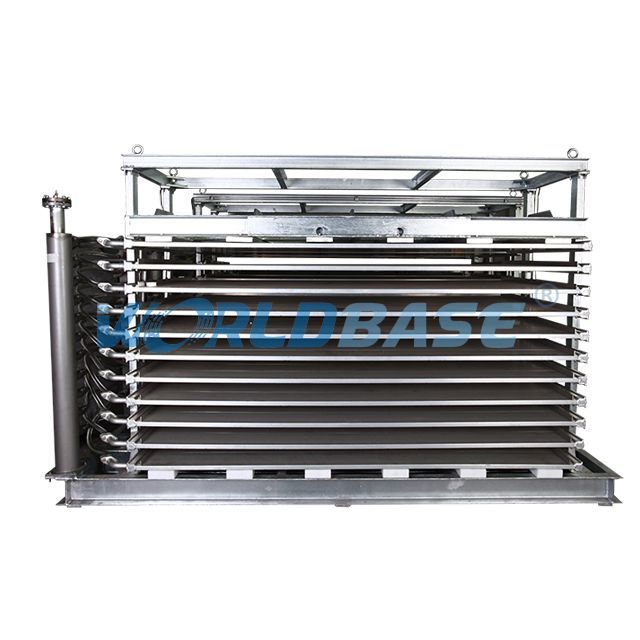
Running a high-volume seafood line leaves little room for freezing bottlenecks, so the plate freezers that earn repeat orders tend to combine short cycle times with rugged, easy-to-clean frames. The Jackstone Mark series and DSI horizontal plate freezers are the two names most production managers mention first, though Optimar's plate freezers have gained ground in pelagic processing. What sets these units apart isn't a single feature but how well they hold contact pressure across the full plate surface, which keeps block thickness consistent when you're pushing 40 to 60 cycles a day.
For shrimp, fillets, and whole fish blocks, the best choices usually run with dual refrigerant circuits and quick-defrost plates, because lost time between batches adds up faster than any energy saving. A unit like the Jackstone Mark 7, for example, can freeze a 100 mm block in under two hours while still allowing one side to be cleaned during production. That kind of flexibility matters more on a busy line than a marginally lower first cost.
It's also worth checking how the hydraulic system is built. High-volume seafood plants often overlook this until a seal fails mid-shift. The strongest recommendations go to machines with externally mounted cylinders and stainless-steel contact surfaces, as they tolerate washdowns and salt exposure better. If your line runs multiple species or changes block sizes often, look for models with adjustable plate spacing and programmable pressure profiles—those small conveniences prevent most of the daily slowdowns that quietly cut throughput.
What to Look for in a Plate Freezer Before You Buy
Spend a few minutes checking the plate flatness and how evenly the refrigerant flows before you get swayed by the listed freezing capacity. A machine can have impressive specs on paper, but if the plates don’t make full contact with your packaging, you’ll end up with soft spots and longer cycle times. Ask the supplier to run a load with your actual product, not just water or standard test blocks, so you can see the freeze profile across the top, middle, and bottom plates.
Also pay attention to the smaller mechanical details that affect daily use. Look at the seal design around the cabinet, the drain pan layout, and whether the hydraulic or manual closing mechanism moves smoothly without needing constant adjustments. Materials matter here—stainless steel frames and anodized or coated plates hold up better in wet, cold conditions. If you have limited floor space, check the required clearance for loading and maintenance, not just the overall footprint.
Vertical Plate Freezers vs Horizontal Plate Freezers for Tight Spaces
When every square foot counts, the choice between vertical and horizontal plate freezers often comes down to how you stack your priorities. Vertical units stand tall and narrow, tucking neatly into corners or against walls where a horizontal model would sprawl awkwardly. They let you load from the front, which is a lifesaver in cramped kitchens or processing rooms where swing space is limited. But that upright design also means you're fighting gravity every time you pull a frozen slab out—heavier items sit low, and reaching the top shelf can feel like a tug-of-war.
Horizontal freezers, by contrast, hug the floor and spread wide. They're the go-to when you have a low ceiling or need to roll loaded carts directly over the open plates. The trade-off is floor real estate: a horizontal unit eats up footprint fast, and in a tight space that can force you to sacrifice prep areas or walkways. Yet there's a hidden advantage—loading is easier on the back because everything sits at waist height, and the product rests evenly without shifting during freeze cycles.
For really tight layouts, many operators mix both: a vertical unit against the back wall for high-volume batches and a slim horizontal model near the door for quick access items. The key is measuring not just the floor dimensions but also the vertical clearance, door swing, and how often you'll need to rotate stock. What works in a spacious warehouse might choke a compact seafood market, so test the workflow before committing.
Reducing Energy Bills with the Right Plate Freezer Settings
The easiest win is often the setpoint itself. Many walk-in plate freezers are dialed to -25°C or lower simply because the original installer left them there. If your frozen goods only need -18°C for safe storage, running the plates five to seven degrees colder than necessary can add 10–15% to your energy use. Check the actual product specification, then reset the controller in small increments while monitoring core temperature. A properly calibrated probe keeps the compressor from working harder than the load demands.
Defrost settings matter just as much as temperature. When ice builds up on plate surfaces, it acts like a blanket, forcing longer run times and higher amp draw. Instead of a fixed timer that melts ice you don't have, set the defrost interval from observed frost thickness—maybe every 6 hours in humid months and every 12 in dry ones. Demand-defrost controls can trim this further. Also keep door gaskets sealing tightly and limit the number of door openings during loading; each blast of warm, moist air becomes frost that the next cycle has to remove.
Finally, look at how the plates physically interface with the product. On adjustable plate freezers, a gap of even a few millimetres between plate and package doubles freezing time and wastes energy. Set the plate spacing so it makes firm, even contact without crushing the cartons. Keep plate surfaces clean and free of labels or plastic film, and check refrigerant charge once a season—an undercharged system can run 20% longer for the same cooling. Together these small settings changes compound into a noticeable drop in the monthly bill.
Quick Maintenance Checks That Prevent Costly Plate Freezer Downtime
Plate freezers work hard, cycling through extreme temperature swings day after day. The first thing to watch is the hydraulic system. Check the oil level and look for any small leaks around fittings and hoses. A drop in oil pressure, even a slight one, can lead to uneven plate contact, which means some packages freeze slower than others. Replace worn seals before they cause a full system lock-up.
Next, pay attention to the refrigerant charge and the condition of the expansion valve. If you notice frost building up only on one section of the suction line, or if the temperature difference across the plates becomes inconsistent, you may have a low charge or a restricted valve. A quick touch test on the liquid line can reveal a lot: it should feel warm, not hot. Catching these issues early prevents the compressor from running longer and harder than it should, which is what often leads to unexpected shutdowns.
Finally, don't overlook the simple mechanical parts. Inspect the guide pins and bushings for wear. If the plates start to bind or move unevenly during opening and closing, that extra friction puts stress on the entire frame. A few minutes spent greasing the right points and tightening loose bolts after each shift will save you from a midnight call about a jammed freezer that refuses to open.
FAQ
For small seafood operations, prioritize stainless steel plates and a design that handles frequent washdowns. Look for a unit with adjustable plate spacing if you freeze irregularly shaped product, and check the pull-down time at your expected load. A self-contained refrigeration package saves floor space and simplifies installation.
Horizontal plate freezers usually work better for boxed or uniform blocks because the plates make full contact with the top and bottom surfaces. Vertical models can be faster to load and unload but may leave air gaps unless you use pressure plates. For boxed fish, horizontal with a hydraulic ram gives consistent contact and fewer partial freezes.
Plate freezers often cut freezing time by 30 to 50 percent for solid or flat products because conductive heat transfer is more direct than air. A 50 mm fish block might freeze in two to three hours in a plate freezer, while a blast freezer could take four to six hours. The exact difference depends on product thickness, contact pressure, and refrigerant temperature.
Watch for hydraulic system leaks, worn plate seals, and frost buildup on refrigerant lines. Check plate alignment every few months because misaligned plates reduce contact and slow freezing. Clean the plates regularly to prevent residue from acting as insulation, and inspect the refrigerant charge if pull-down times start creeping up.
DSI, Jackstone, and Milmeq are common choices in commercial processing. DSI offers a wide range of horizontal and vertical models with strong support in North America. Jackstone has a reputation for robust plate construction in high-volume fish plants. Milmeq is often specified for automated lines and heavy-duty freezing.
Yes, plate freezers work well for any product that can be formed into flat, uniform packages. Prepared meals, spinach blocks, fruit purees, and even some bakery items freeze efficiently when packed in shallow trays or molds. Avoid loose, odd-shaped items that don't create full plate contact.
A rough calculation starts with cycle time. If a batch takes 3 hours and you run 8 cycles per day, you need about 250 kg capacity per batch. Add 15 to 20 percent buffer for loading and defrost downtime. A horizontal plate freezer with 10 to 12 stations at 20 to 25 kg per station would generally handle that volume.
For medium to high volume operations, yes. Automatic spacing reduces operator strain and ensures consistent pressure across every plate, which improves freeze times and product uniformity. Manual systems can work for small batches, but the labor savings and fewer soft spots usually justify the higher upfront cost.
Conclusion
Choosing the right plate freezer comes down to matching freeze speed with your daily throughput. Direct-contact plates pull heat out of product far quicker than blast air, locking in texture and moisture before large ice crystals can form. For seafood lines running hundreds of kilos per shift, horizontal models with hydraulic plate movement often handle dense, flat cartons best, while vertical plate freezers save floor space in narrow processing rooms. Look for adjustable plate spacing, robust door seals, and a control panel that lets you set different pull-down rates for whole fish, fillets, or shrimp blocks.
Beyond the initial purchase, operational habits determine long-term value. A plate freezer set to the right suction temperature uses noticeably less electricity per tonne than one left at factory defaults, especially if you batch similar product sizes. Simple routines make a bigger difference than most operators expect: checking plate surface frost, confirming oil return, and listening for unusual compressor cycling can catch refrigerant leaks or worn gaskets before they force an unplanned shutdown. Whether you pick vertical for a compact line or horizontal for high-volume packaging, the best recommendation is a unit sized about twenty percent above current peak load—that headroom keeps freeze cycles efficient on your busiest days without wasting energy during slower ones.
Contact Us
Contact Person: Mr Yang
Email: [email protected]
Tel/WhatsApp: +8613809083091
Website: https://en.worldbase.cn