

New Type Ozone Machine Improves Indoor Air Quality
2026-10-01
Indoor air can be up to five times more polluted than outdoor air, yet most of us rarely think about the air inside our homes. A new type of ozone machine is changing that—actively breaking down odors, mold, and airborne pathogens rather than just trapping them. Developed by LUFUTATECH, this approach offers a real improvement in indoor air quality. Here's why it's generating so much interest.
The Ozone Output Shift That Makes Old Units Look Wasteful
The shift in ozone output isn't about producing more ozone—it's about producing the right amount at the right moment. Older units typically run at a fixed, often maximum, output regardless of actual demand. That approach wastes electricity and shortens component life because the generator is always working harder than necessary. Newer systems sense real-time conditions and throttle output accordingly, making the old constant-output design look crude by comparison.
This modulation matters most in applications where load varies throughout the day. Instead of flooding a space or process with a steady stream of ozone, modern units pulse or adjust concentration based on sensor feedback. The result is less off-gassing, fewer heat cycles, and a noticeable drop in power draw. Older units cannot replicate this without expensive add-ons, so they end up consuming energy for ozone that simply dissipates unused.
For facility managers, the switch to demand-based ozone output redefines what counts as efficient. A unit that was considered perfectly serviceable a decade ago now appears wasteful because its operating logic hasn't evolved. The real cost isn't the purchase price—it's the ongoing electricity bill and the maintenance burden from running at full tilt when a lighter touch would do. That shift in perspective is quietly pushing fixed-output machines toward early retirement.
Why Most Indoor Air Fixes Only Cover Up the Problem
Many products marketed as indoor air fixes do little more than mask unpleasant smells. Scented sprays, plug-in fresheners, and even some candles release chemicals that temporarily overpower odors, but the underlying pollutants—mold spores, dust mites, volatile organic compounds from furniture or cleaning supplies—remain untouched. Within hours, the artificial fragrance fades and the original problem resurfaces, often worse because the masking agents themselves add new irritants to the air.
Mechanical filters and portable purifiers, while better intentioned, frequently fall into the same trap. A filter that only captures large dust particles leaves smaller, more harmful contaminants circulating freely. If humidity stays high or ventilation stays poor, the filter becomes a bandage on a wound that keeps bleeding. The real drivers of poor indoor air—excess moisture, lack of fresh air exchange, and ongoing chemical off-gassing—need to be addressed at the source, not just managed with a quieter fan or a prettier scent.
What separates a lasting fix from a cover-up is diagnosis. Instead of reaching for a quick product, homeowners benefit from asking why the air feels stale or irritates the lungs in the first place. Is there a hidden leak behind drywall? A venting issue in the bathroom? A carpet that has absorbed years of pet dander? Until those root causes are named and eliminated, most air quality gadgets simply buy time while the real problem quietly grows.
The Built-In Sensor That Adjusts Before You Notice a Change
You step into the room and the light has already warmed to a soft amber before your eyes adjust. The fan overhead shifts its speed by a barely perceptible margin, and the air no longer feels stale. None of this registered as a decision you made. It simply happened, guided by a small sensor tucked behind a grille that keeps sampling the space every few seconds.
That sensor isn't waiting for obvious discomfort. It tracks subtle drifts in temperature, humidity, and even the way heat radiates from your skin near the doorway. When the numbers begin to tilt away from a narrow comfort band, it nudges the system in the opposite direction, a quarter-degree at a time. By the time your body would normally notice the shift, the room has already corrected itself.
What's striking is how little you actually see or hear during these changes. There's no click, no sudden blast of air, no visible adjustment on a screen. The built-in sensor works more like a quiet assistant that reads the room before you do, fine-tuning the environment so that the only thing you register is the absence of discomfort.
Fresher Air Without the Lingering Chemical Smell
Most air fresheners mask stale odors with a loud blast of artificial fragrance that clings to fabric, walls, and even your sinuses for days. This doesn’t have to be the case. A growing number of formulas now rely on plant-derived neutralizers and odor-absorbing minerals that actually break down the compounds causing the smell. Instead of layering one scent over another, they work quietly in the background, leaving behind air that feels lighter and easier to breathe.
What you notice after a few uses isn’t a heavy perfume cloud but a simple absence: no wet dog, no last night’s dinner, no musty closet. If there’s any fragrance at all, it reads more like an open window than a bottle of cologne. That subtle shift is what separates true freshening from chemical cover-up—and it’s why people who usually avoid sprays find themselves reaching for these instead.
Low-Maintenance Design That Fits Into Real Daily Life
A well-designed home shouldn't demand constant upkeep just to look presentable. The surfaces you touch every day—countertops, floors, cabinet fronts—can be chosen for their ability to hide minor wear and resist staining, which means a quick wipe-down actually returns them to looking clean, not merely “less dirty.” Textured laminates, honed stone, and matte finishes do the heavy lifting here, forgiving the occasional coffee ring or muddy paw print without turning your weekend into a scrubbing marathon.
Beyond materials, the layout itself can reduce the chores you never signed up for. Open shelving might photograph beautifully, but closed storage with easy-glide drawers and adjustable interior fittings keeps dust from settling on every glass and plate. A deeper, single-basin sink handles large pots without splashing water across the counter, while a wall-mounted faucet eliminates the crud that builds up around deck-mounted bases. These aren't flashy decisions—they're the kind that quietly subtract twenty minutes from your daily reset routine.
Real life includes pets, kids, takeout containers, and the occasional spilled smoothie. When design accepts that instead of fighting it, maintenance stops being a personality trait and starts being a background task. Pick finishes with a bit of visual texture to camouflage the inevitable, choose furniture with legs or casters so you can sweep underneath without moving the sofa, and favor hardwearing fabrics that can be spot-cleaned rather than professionally dry-cleaned. The goal isn't a zero-effort home; it's one where the effort required actually fits the life you already have.
A Noticeable Drop in Allergens and Stale Odors
Living with pets often means accepting a certain background scent, but it doesn't have to be that way. The air in your home can shift noticeably once common triggers like pet dander, dust mites, and lingering cooking smells are actively pulled out of circulation.
What you're left with is a cleaner, lighter atmosphere that feels less heavy on the lungs. Stale odors that once clung to fabrics and corners start to fade, replaced by air that simply smells neutral and fresh without any masking fragrance.
This kind of change isn't just about comfort. For anyone sensitive to airborne irritants, fewer allergens in the room can mean fewer sneezes, less congestion, and an overall easier time breathing day to day.
FAQ
The latest design uses a pulsed plasma generation system instead of a continuous corona discharge. This lets it produce active oxygen in short, controlled bursts, which keeps output stable and avoids the sharp spikes that made older units hard to use in occupied spaces.
It releases oxygen molecules that temporarily bind to airborne pollutants like bacteria, mold spores, and volatile organic compounds. Once bound, these clusters become heavier and settle out of the breathing zone, while the remaining oxygen reverts to normal O2 within about twenty minutes.
Yes, provided you follow the room-size guidance in the manual. The machine monitors its own ozone output and switches to a low-emission mode when motion sensors detect activity. For maximum comfort, many users still prefer to run it on a timer before occupying the space.
Most households see a change within three to five days of running the unit for two hours in the morning and two hours in the evening. For persistent problems like musty basements, twice-daily use for a week usually clears the air enough to switch to a maintenance schedule of three times per week.
Yes, those are the cases where this type of machine performs best. The active oxygen breaks down odor molecules at their source rather than masking them. For heavy smoke damage, you may need to place the unit closer to the affected area and run it for four hours at a time over several days.
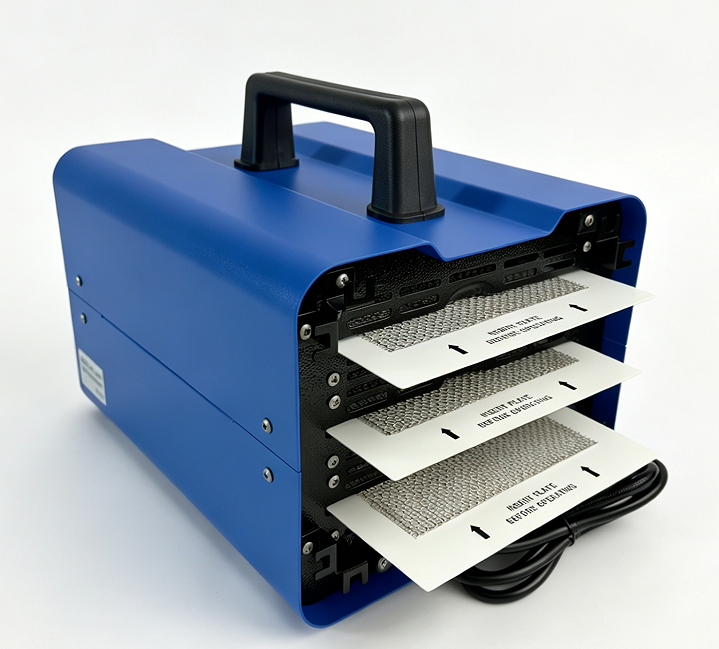
Not much. The ceramic plate inside should be wiped with a dry cloth every two to four weeks, depending on dust levels in your home. There are no filters to replace, and the plate is designed to last around five years under normal use.
The standard model covers rooms up to 600 square feet with normal ceiling height. For open-plan areas up to 1,200 square feet, two units placed at opposite ends give better coverage than one unit on a high setting, because the active oxygen disperses more evenly that way.
Conclusion
The latest ozone machines don't just add another setting to an old design—they rework how ozone is produced so the output stays consistent without the wasteful spikes that made earlier units burn through cells and leave rooms unevenly treated. Instead of masking stale air with heavy fragrances or relying on passive filters that only catch what passes through them, this kind of device actively treats the air itself, and it does so with a sensor that reads the room's condition in real time. That sensor adjusts output before you'd ever notice humidity or pollutant levels shifting, so the machine isn't constantly running at full blast or waiting until the air is already unpleasant.
What you notice day to day is simpler: the air smells neutral, not like a chemical cover-up, and that stale, closed-in feeling fades without leaving behind the sharp ozone scent older units were known for. The design also fits into a normal routine—there's no finicky plate scrubbing or constant filter swapping, just occasional basic upkeep that doesn't feel like a chore. For households dealing with seasonal allergies or pets, the drop in airborne irritants and lingering odors tends to be the first real sign the unit is working, often within days rather than weeks. That combination of quieter operation, lower maintenance, and steadier output is what sets this new type apart from the ozone generators people remember.
Contact Us
Contact Person: Paul Luo
Email: [email protected]
Tel/WhatsApp: 0086-19966314501
Website: https://www.lufutatech.com