

High-Strength OEM Cold Forged Parts for Automotive and Industrial Applications
2026-11-16
In the world of high-performance manufacturing, the smallest components often carry the greatest responsibility. From automotive powertrains to heavy-duty industrial machinery, cold forged parts are the hidden backbone of structural integrity and long-term reliability. At BOYIKUN, we don't just forge metal—we engineer precision solutions that meet the most demanding OEM specifications. Here's why our high-strength cold forged components are redefining what durability means across automotive and industrial sectors.
Why Cold Forging Outperforms Traditional Machining for Critical Components
Cold forging reshapes metal at room temperature, compressing the grain structure instead of cutting through it. This isn’t just a surface-level advantage—it fundamentally alters how the material behaves under stress. Where traditional machining slices away fibers and creates potential weak points, cold forging flows the grain lines around the part’s contours, boosting fatigue resistance in ways that matter when a failure isn’t an option.
Think about a component that has to endure millions of load cycles—like a steering knuckle or a high-pressure fuel pump piston. A machined version might meet the tolerance specs, but its interrupted grain path often becomes the starting point for cracks. The forged alternative, with uninterrupted material flow, routinely doubles or triples the fatigue life without adding weight or exotic alloys. That’s why engineers in automotive, aerospace, and medical device fields often find themselves ditching the CNC program for a forging die once durability climbs to the top of the requirements list.
There’s also the quiet economics of it. Machining tends to turn a significant chunk of raw bar stock into chips—waste that you’ve already paid for. Cold forging starts closer to net shape, so material utilization jumps past 90 percent in many cases, and the fast cycle times knock per-part costs down when production volumes rise. Pair that with the dimensional consistency that comes from a well-maintained die, and you get a process that doesn’t just outperform on paper; it rewrites the trade-offs between strength, precision, and cost.
Inside the Grain Flow: How Our Process Locks in Fatigue Resistance
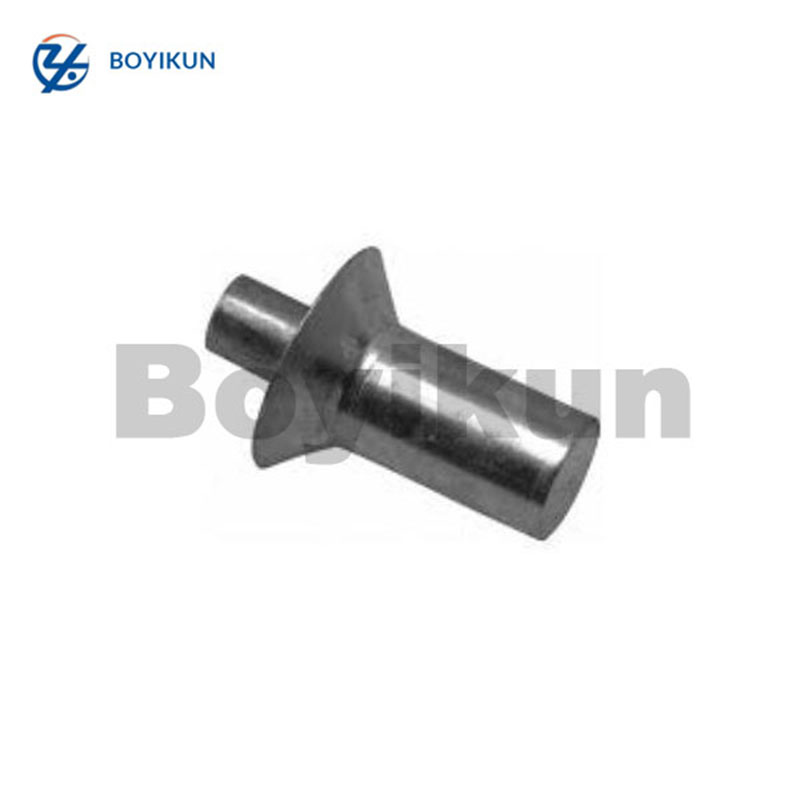
When metal bends or twists under repeated loads, the alignment of its internal grain structure decides whether it lasts or fails. Instead of merely hardening the surface, we manipulate the flow lines at the deepest level—realigning the crystalline pathways so that stress doesn’t find a weak plane to exploit. The result isn’t a cosmetic change; it’s a fundamental one. Under a microscope, you’d see the grain boundaries curving and interlocking like river currents that refuse to break apart, even as the forces try to split them.
We don’t rely on coatings or additives to achieve this. The method forces the metal’s own structure to become its shield. By controlling temperature and deformation in a very narrow window, the grains elongate and reorient without ever losing their cohesion. Strange as it sounds, the material gains strength by learning to flex in unison—each micro-layer supporting the next, rather than grinding against it.
Years of testing have shown that fatigue cracks, when they do appear, grow at half the speed of conventionally processed material. And in most cases, they simply don’t initiate. The cycle life jumps by orders of magnitude, not because we added something, but because we let the grain flow seal its own vulnerabilities before they could matter.
From Steering Knuckles to Hydraulic Fittings: A Cross-Industry Blueprint
What ties together the forged geometry of a steering knuckle and the precise threading of a hydraulic fitting isn’t just metallurgy—it’s the shared language of load distribution, fatigue resistance, and scalable manufacturing. In automotive suspensions, a knuckle must handle multidirectional forces while keeping unsprung weight low, often driving the shift to hollow-core forgings or aluminum alloys. That same demand for strength-per-gram shows up in a compact JIC fitting on a mining excavator, where a burst at 6,000 psi means more than downtime—it’s a safety event. Treating these components as isolated categories misses the patterns that let engineers accelerate design cycles across both mobile and industrial equipment.
Seen through a cross-industry lens, the refinement loop is strikingly similar. Finite element analysis used to sculpt ribs and fillets on a truck’s knuckle housing feeds directly into optimizing the flow path inside a banjo fitting. Heat treatment profiles developed to kill residual stress in a forged steering component become the baseline for high-cycle hydraulic connectors exposed to vibration. Even surface finish specs converge: a shot-peened knuckle spindle chasing reduced crack propagation mirrors the surface integrity required on a stainless-steel ferrule sealing against an O-ring. The material choices diverge—ductile iron here, 316 stainless there—but the validation logic pulls from a common playbook.
Building a blueprint out of these overlaps doesn’t just cut redundant testing. It forces teams to ask better questions early. Does that 37-degree flare angle on a fitting hold any lesson for the taper on a ball joint stud? Can the corrosion-mitigation strategy that protects a marine steering knuckle translate into a longer-lived quick coupler on a fertilizer spreader? The answers often live in the gaps between industries, where a mechanical engineer from fluid power might see a suspension bracket not as a static anchor but as a manifold with inertia loads. That kind of mental cross-traffic turns a parts catalog into a platform—and a platform scales in ways that isolated product lines never will.
Material Versatility Without Compromise: Alloys That Handle Extreme Loads
Modern engineering demands materials that refuse to buckle under pressure—literally. When components face crushing forces, relentless vibration, and shock loads that would shred ordinary metals, the right alloy turns design limits into afterthoughts. These aren’t just incremental upgrades over conventional steel; they are purpose-built solutions where nickel, cobalt, and titanium interlock at the microstructural level to distribute stress evenly, resist crack propagation, and maintain dimensional stability even when pushed past yield points that were once considered absolute.
What makes this versatility truly uncompromising is how it solves multiple failure modes at once. A landing gear strut doesn’t simply need high tensile strength—it must also resist fatigue from cyclic loading, ward off corrosion from de-icing chemicals, and operate consistently from subzero runways to desert tarmacs. Alloys formulated for such extremes combine precipitation hardening with a carefully controlled grain structure, so the same material can be forged into thin-walled tubing or massive structural brackets without sacrificing performance. The result is a single material family that replaces a patchwork of specialized metals, cutting weight and simplifying supply chains in aerospace, deep-sea drilling, and heavy machinery.
Beyond the lab data, the real proof lives in the field. Turbine blades spinning at supersonic tip speeds in corrosive exhaust streams, press dies shaping ultra-high-strength sheet metal under millions of cycles, and deepwater connectors holding back pressures that would crush a submarine—these applications don’t allow for compromise. The alloys selected for them carry loads that would liquefy lesser materials, not because they are simply harder, but because their metallurgy is tailored to the specific rhythm of stress they endure. This synergy between alloy design and real-world loading is where material science meets craft, and it’s why engineers keep coming back to these metals when failure is simply not an option.
Tolerances You Can’t Get from Castings—And Why They Matter on the Assembly Line
When a component emerges from a mold or die, it carries with it a genetic code of variability that machining processes simply don’t have. The nature of pouring molten metal into a cavity means you’re battling shrinkage, uneven cooling rates, and the gradual wear of the tooling itself. Even with precise process control, a cast part will always exist inside a dimensional envelope that’s fundamentally looser than what a machined surface can deliver. This isn’t a flaw in manufacturing—it’s a physical reality. The surfaces that contact the mold are only as accurate as that mold’s current condition, and the internal geometry that forms as the metal solidifies will shift in ways no simulation can perfectly predict.
Typical sand or investment castings struggle to hold positional tolerances tighter than ±0.5 mm on features spread across a parting line, and flatness across a large face can easily wander outside 0.3 mm. True position for cast-in holes? Seldom better than 0.8 mm, and often much worse once draft angles and surface irregularities pile on. These numbers might look small, but they stack up fast. A bracket that anchors a sensor won’t bolt up cleanly if the mounting pads aren’t coplanar within a few tenths. A housing that mates with a sealed lid will leak if the sealing groove depth varies by more than 0.1 mm. Castings simply don’t give you that level of control off the tool—they give you a near-net shape that still needs local refinement where precision matters.
On the assembly line, these limitations stop being abstract numbers and start becoming torque spikes, misaligned fasteners, and callbacks from the test bay. A cast lug that’s off by half a millimeter might still accept a bolt, but the stress distribution changes, and so does the long-term fatigue life of the joint. Automated pick-and-place systems rely on consistent datum surfaces; when each casting comes in with its own subtle twist, the robot’s vision system burns precious milliseconds adjusting or rejecting parts. The fix is almost always the same: spot-facing, reaming, milling pads, or adding shimming operations downstream. Each extra step is a cost that could have been avoided if the designer understood where cast tolerances run out of breath—and where assembly integrity demands something tighter.
Scaling from Prototype to High-Volume Production Without Losing an Ounce of Strength
Moving from a single working prototype to thousands of units a week isn’t just a matter of multiplying your bill of materials. It’s about confronting the quiet places where quality erodes: slight shifts in raw material batches, tooling wear that creeps in after the first few thousand cycles, and assembly line fatigue that turns a perfect hand-finished edge into a variable one. The real challenge isn’t whether your design can be made—it’s whether it can be made identically, time after time, while your cost structure holds.
We anchor this transition by building the production process around the exact failure points we discover during prototyping. Instead of treating the prototype as a golden sample to be blindly replicated, we reverse-engineer every load path, every fatigue-prone joint, and every tolerance stack-up that gave the original its toughness. Then we lock those into fixtures, in-line testing, and automated checks that make deviation practically impossible. The result is a production line where variation is measured in microns from unit one to unit fifty thousand, and where the strength values you certified on the bench remain valid on the pallet.
Scaling without compromise also means rethinking materials and joining methods early—not after the purchase orders have been signed. A casting alloy that flows beautifully in a five-piece pilot run might lose consistency when poured at volume; a threaded insert that holds perfectly in a lab may fail under rapid insertion on the line. By running statistically significant pre-production batches and deliberately testing at the edges of process windows, we eliminate surprises before they have a chance to appear. The final product doesn’t just meet the same spec sheet—it carries the same overbuilt confidence you felt when the first prototype survived tests it was never supposed to pass.
FAQ
It’s really about how the metal grain flows. Machining cuts through the material’s internal structure, but cold forging squeezes the grain into a continuous pattern that follows the shape of the part. That gives you much higher fatigue resistance and impact strength—exactly what you need when a hub is taking cornering loads over and over. On top of that, we can form near-net shapes with very little material waste.
Yes, but it all hinges on the tool design. We use multi-stage progressive dies that gradually shape the raw wire or slug. For something like a transmission shaft with splines and a flange, we can forge it so the splines are almost fully formed, then only grind the bearing seats. It’s not automated magic—it takes simulation software and a lot of hands-on experience to fill tight corners without cracking.
We regularly deal with alloy steels like 4140 and 8620, micro-alloyed grades that skip post-forge heat treatment, and even certain stainless steels when corrosion resistance matters. The choice really depends on the strength-toughness balance you’re after. I’ve seen a customer swap a machined 1045 component for a forged micro-alloyed steel and cut costs considerably while boosting part performance.
The dies are the starting secret. We use carbide inserts in high-wear spots and monitor die wear in real time. Every batch of raw material is checked for consistency—if the billet diameter shifts by more than a few microns, the forged part will drift too. We also run a precision sizing step right at the end of the forging cycle, which is still cold forming, not machining. That locks in the tolerance.
Often, yes. With polished dies and the right lubrication, surface roughness can come out as low as Ra 1.6 µm. For sealing faces you might still need a grind, but for things like spline flanks or journals that carry a bushing, many of our OEM customers just apply a phosphate coat and ship. It saves them significant process time.
We look at the entire process chain. The material is spheroidized annealed correctly so it flows without micro-cracks during deformation. Then critical features get 100% eddy current or magnetic particle inspection. Honestly, the biggest factor is the initial design—we work with the customer early to adjust fillet radii and section changes. A well-designed forging simply doesn’t have the weak spots you’d find in a casting.
It’s not just for millions of pieces. Tooling can be modular. For a run of 20,000 hydraulic fittings, we might use quick-change insert setups that keep investment reasonable. The break-even point against machining depends on part complexity, but I’ve seen jobs as low as 5,000 units make perfect sense once you count the material savings and consistent repeatability.
We run zinc-nickel plating that easily handles 720 hours of salt spray, plus dip-spin coatings for blind holes and manganese phosphate when you want good wear-in behavior on gears. Since the lines are in-house, parts move straight from forging to cleaning to coating without sitting around. That prevents flash rust and ensures the coating bonds the way it should.
Conclusion
What sets high-strength OEM cold forged parts apart isn’t a single advantage, but the way multiple metallurgical and process controls converge in a single component. Traditional machining cuts through grain structure, creating natural weak points that propagate fatigue—cold forging, by contrast, redirects and compresses that grain flow so it follows the contour of the part. The result is a part that inherently resists crack initiation, especially in cyclical loading conditions where machined alternatives would eventually fail. This fatigue resistance isn’t a surface treatment or a coating; it’s locked into the metal itself from the moment the billet is forced into shape under extreme pressure. For critical automotive and industrial applications, that means designers can push closer to the material’s theoretical limits without padding safety factors for process-induced vulnerabilities.
That same process also unlocks a practical versatility that spans industries and production scales. The same cold forging fundamentals that produce a steering knuckle tough enough to absorb road impacts also deliver hydraulic fittings with internal passages precise enough to seal at 5,000 psi—often without secondary machining. Alloy selection stays flexible because the work-hardening effect can elevate yield strength beyond what the raw stock chemistry would suggest, so engineers can optimize for corrosion resistance or weight without sacrificing load capacity. And when moving from prototype validation to high-volume runs, the transition remains almost seamless: tooling is designed to hold tolerances down to a few microns from the first strike, eliminating the variability that plagues castings and the slow cycle times of subtractive methods. On the assembly line, that translates into predictable fit-up, reduced inspection overhead, and a supply chain that doesn’t wobble when demand spikes.
Contact Us
Contact Person: Xianchen Hu
Email: [email protected]
Tel/WhatsApp: 86-13248645200
Website: https://www.hexnb.com/