

Customized Fit Toyota Tundra Truck Seat Cover Manufacturer Guide for a Perfect Interior
2026-11-02
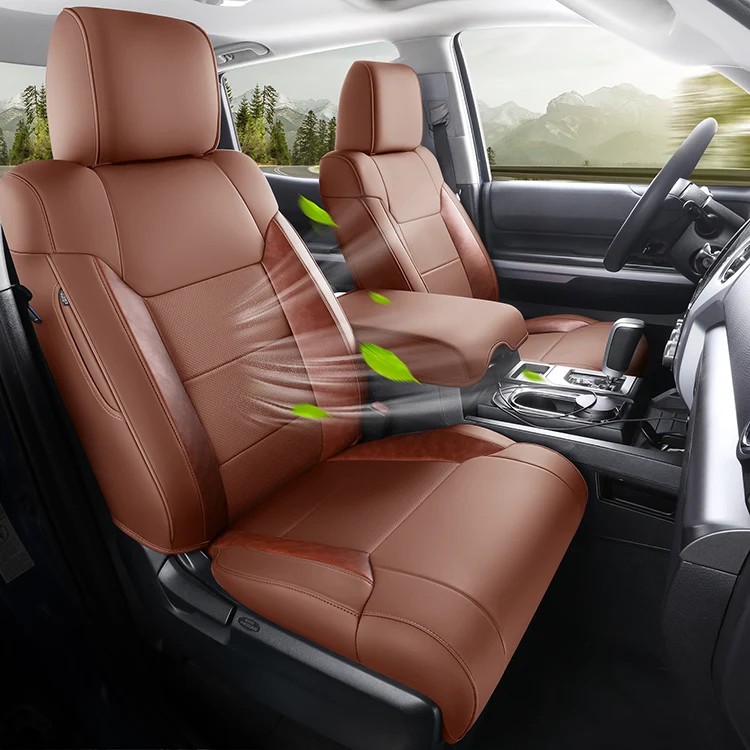
Your Toyota Tundra works hard, but its seats shouldn’t look like they’ve been through a demolition derby after a year of daily use. Off-the-shelf covers rarely match the Tundra’s bolsters, console cutouts, or rear underseat storage, leaving gaps and wrinkles that scream 'universal fit.' This guide strips away the guesswork, walking you through what a true customized fit looks like and why Red Rain has become the go-to manufacturer for owners who want a showroom interior without the showroom price.
What Happens When You Stretch a Universal Cover Over a Tundra Seat
You slide a universal cover over a Tundra seat and the first thing you notice is how much extra fabric bunches near the base. Tundra seats are taller and wider than most compact or midsize trucks, so a one-size-fits-all cover ends up looking more like a loose t-shirt than a tailored fit. The side bolsters don't get full coverage, and the center panel pulls forward every time you get in.
If you keep using it, the cover starts shifting. The elastic straps underneath can't reach the factory anchor points because the Tundra's seat pan is deeper. You end up with a wrinkled mess on the bottom cushion and exposed edges along the backrest. Every time you adjust your seating position, you hear that telltale slip of fabric against leather or cloth.
There's also the airbag issue. Many universal covers don't have the proper tear-away seams for Tundra's side-impact airbags. If you stretch the cover over the seat, you might cover the airbag flap entirely. That's not just an aesthetic problem—it can delay deployment or send the cover material into your side during a crash. So while it might hold up for a few weeks, the stretched universal cover usually ends up in the garage pile.
The Art of Copying Every Curve in a Tundra's Cabin
Recreating the exact silhouette of a tundra cabin isn't a task for a quick sketch or a digital scan. Each log has settled against the next over decades, shifting with frost heaves and the slow groan of permafrost. The roof line sags just enough to hold a memory of winter snow loads, while the doorframe leans a few degrees east, worn by prevailing winds. To copy every curve, you first have to listen to the structure the way a musician listens to an old fiddle—learning where it breathes, where it resists, and where time has carved its own signature.
The process often begins with a full-scale rubbing, pressing paper or cloth against each timber to capture knots, cracks, and the shallow gouges left by a hand axe. Then comes the careful mapping of irregularities: a jamb that's thicker at the bottom, a window sill polished by elbows, a corner joint that's pulled apart just enough to let in a sliver of arctic light. Rather than forcing the copy into perfect geometric alignment, the artisan works outward from these flaws, letting the original cabin's history dictate the new material. A slight bow in the ridgepole isn't corrected—it's celebrated, reproduced in green wood that will eventually settle into the same tired posture.
What emerges is not a mere replica but a translation. The copied curves carry forward the quiet logic of survival in a treeless landscape, where every bend in a log once meant the difference between warmth and exposure. By honoring each distortion and lean, the copy becomes a living archive—not of measurements, but of a place, a climate, and the hands that first stacked those walls against the wind.
Materials That Soak Up Abuse Without Making You Regret It
Some fabrics just know how to take a hit. A tightly woven polyester with a soft brushed face, for example, can handle muddy paws, spilled wine, and the odd craft project gone sideways without turning into a permanent crime scene. Spills sit on the surface long enough to be dabbed away, and the texture stays pleasant even after you've scrubbed it more times than you'd like to admit.
Hard surfaces have their own version of this. Quartz and high-density polyethylene board don't flinch when a cast-iron pan drops or a knife slips. They won't develop that one deep gouge you feel obligated to point out to guests. Best of all, they skip the fussy maintenance routines. A damp cloth and a bit of patience cover most sins, and the finishes can look convincingly like stone, concrete, or matte metal without the industrial chill.
For gear that lives outdoors or gets tossed through airport security, ripstop nylon and tightly woven blends earn their keep. They shrug off rock scrapes, zipper teeth, and conveyor belt abuse while hiding scuffs in a matte or brushed surface. The good ones also dry fast and resist water, so a sudden storm or a coffee spill becomes a minor footnote rather than a lingering regret. That's the whole point: the material takes the punishment, and you get to skip the guilt.
How to Match the Tundra's Interior Down to the Last Stitch
Tundra interiors have a quiet, almost weathered character that doesn't come from a designer catalog. The trick is to study the materials that already exist in the truck—the way the dash plastic has a subtle grain, how the seat fabric catches light, the exact hue of the door panel stitching that's almost invisible until you sit inside. Take a photo in natural daylight and zoom in. You'll notice the stitching isn't pure black or pure gray; it's somewhere between charcoal and storm cloud, with a slight sheen that only a specific thread weight can reproduce.
Instead of chasing after aftermarket kits that claim to be "OEM style," look at upholstery supply stores that serve marine and heavy-duty vehicle repairs. They often carry threads with the same UV resistance and tight twist as factory threads. Match the stitch length too—some Tundra models run about 3 millimeters per stitch, others slightly longer. A simple ruler pressed against the existing seam will tell you more than any forum post. And don't ignore the backing material: the soft foam under the vinyl or cloth changes how the thread sits after it's sewn, so a test swatch on scrap material is worth the extra ten minutes.
If you're restoring a worn section rather than doing a full interior swap, blend the new stitching into the old by gently distressing it before installation. A light pass with a very fine sanding sponge or a few minutes of rubbing against denim removes the "fresh from the spool" brightness. Then apply a tiny amount of matte clear conditioner to the surrounding area so the repaired seam doesn't stand out as an obvious patch. The goal isn't perfection—it's continuity. When you open the door, the eye should move across the seat, the console, the steering wheel, and never stop at your work.
Straps, Clips, and Tension Points That Keep the Cover Put
Most covers rely on a few honest details to hold their shape through wind, rain, and the occasional impatient tug. Straps with reinforced stitching run under the belly or through buckles, and they don't ask for praise—they just keep the fabric from ballooning like a sail. You'll notice the difference when a storm rolls in and the cover barely shifts, because the load is spread across wide webbing rather than a single stressed seam.
Clips do more than fasten; they decide how quickly you can get the cover off when you're already running late. A well-placed quick-release buckle sits where your hand naturally falls, not buried under a flap that needs three fingers and a flashlight. Some covers use metal D-rings that survive being stepped on, while others opt for low-profile plastic that won't scratch paint in a tight garage. The point isn't just security—it's that the clip holds without turning a five-second removal into a wrestling match.
Then there are the tension points, the quiet workhorses along hems and corners. Elastic cords threaded through the edge create an even grip that adjusts as the cover settles, so you don't end up with a loose pocket flapping at highway speed. Reinforced grommets give you a place to add a lock or an extra tie-down without tearing the fabric. It's these small, almost invisible details that separate a cover you have to fuss with from one you forget is even there.
Keeping the Fit Tight After Years of Sun, Dirt, and Hard Use
After seasons of baking sun, caked-on dirt, and rough handling, the snug feel you remember usually starts to slack. But if you spend an afternoon working a soft brush and lukewarm water into the seams, then let everything air dry out of direct light, the original grip often returns. Skip the harsh degreasers—they leave the fibers brittle and worse off than before.
Sunlight is the quiet killer. Ultraviolet rays break down elastic threads long before the outer fabric shows any real wear. A piece that's seen five hard years may look fine on the surface while the stretch inside has already given up. Applying a thin conditioning rub every few months, or even draping a damp cloth over it overnight, slows that decay. The trick is to act while there's still some rebound left.
After heavy use, the lost fit isn't always material fatigue—often it's the attachment points. Loose stitching, worn buckles, and stretched adjustment straps account for more sag than people assume. Go over every seam and clasp, tighten what you can, and replace the small parts that have worn smooth. A few minutes with a curved needle and some nylon thread, plus heat-shrink tubing on the hardware edges, can bring back the majority of the original hold.
FAQ
A true custom cover starts with the exact seat dimensions of your Tundra's cab style, whether it's a CrewMax or Double Cab. Manufacturers map every contour, from the headrest shape to the side bolster depth, so the cover wraps without sagging or pulling. It also accounts for the seat's controls and fold-down armrests, leaving them fully usable.
They work from digital scans or physical templates of each Tundra seat variant, including the front buckets, bench, and rear folding sections. This lets them pattern the cover with precise seam placement and anchor points. A good manufacturer will ask for your year, trim, and cab style before cutting, rather than relying on a one-size-fits-most shape.
For daily wear, heavy-duty canvas or ballistic nylon resists abrasion from tools and gear. If you want a softer feel with spill protection, look for marine-grade vinyl or a neoprene blend. Leather-look polyurethane offers an easy-clean surface while keeping the install lighter. The key is a tight weave or coated surface that won't fade or crack under sun and temperature swings.
Yes, but only when the manufacturer designs for them specifically. The side panels need breakaway stitching that lets the seat-mounted airbag deploy without obstruction. For heated or cooled seats, the cover should use breathable, perforated panels or thin, heat-conductive layers so the function still reaches you. Always confirm these features with the maker before ordering.
Pay attention to how clearly the guide explains measuring points, installation steps, and care instructions. A useful guide shows photos or diagrams of your exact Tundra seat, not generic truck seats. It should also list any tools needed, like a trim tool or hook-and-loop strips, and give tips for tucking excess material around plastic trim without damaging clips.
Universal covers rely on elastic straps and generic shapes, so they often shift when you slide in or out. Custom-fit covers are tailored to the seat's dimensions and use molded channels, hook-and-loop seams, and under-seat straps that align with factory anchor points. This means the cover stays put even with heavy use and looks like it came from the factory floor.
Tundra seats have pronounced side bolsters and a fairly upright backrest, so a pattern that's off by even half an inch can cause wrinkles or block the recliner lever. Precision patterning keeps the seams on the natural crease lines of the seat, so the cover follows the shape instead of fighting it. This is what separates a tailored look from a saggy slipcover.
You can choose contrasting piping, embroidered logos, or a two-tone layout that matches your Tundra's interior trim. Many manufacturers offer different foam backing thicknesses for added comfort, and some let you pick pocket placement on the back or sides for extra storage. This way the cover becomes a functional upgrade, not just a protective layer.
Conclusion
Sliding a universal cover over a Tundra seat never ends well. The fabric bunches at the bolsters, the seams drift off center, and the first hard entry leaves wrinkles that won't relax. A proper customized fit starts long before the first stitch—every curve of the seat base, backrest, and headrest gets mapped so the cover mirrors the factory contours instead of fighting them. That means panels are cut for the Tundra's specific foam shape, not stretched from a generic template, and materials are chosen to take daily abuse without cracking, fading, or turning sticky under heat. You want something that still feels good after a muddy workday, not a vinyl sheet that punishes you for wearing jeans.
The difference also shows in the details. Thread colors and stitch patterns are matched to the truck's interior so the cover looks like it came from the factory floor, not an afterthought. Underneath, the cover relies on straps, clips, and tension points placed exactly where the Tundra's seat frame allows—no loose corners, no sliding when you climb in. And the real test is time. A well-built custom cover keeps its grip after years of sun, dirt, and hard use because the materials resist UV damage and the attachment points hold their tension. That's how you end up with an interior that still feels tight and deliberate, not just covered.
Contact Us
Contact Person: Ms. Zhu
Email: [email protected]
Tel/WhatsApp: 86-15906860931
Website: https://www.redrainseatcovers.com