

Color Masterbatch Brand Factors That Influence Color Quality and Consistency
2026-10-13
When it comes to achieving vibrant, uniform colors in plastic products, the choice of color masterbatch brand isn't just a detail—it's the difference between a flawless finish and a costly inconsistency. Behind every consistent shade lies a complex interplay of pigment dispersion, carrier resin compatibility, and process control that only a seasoned manufacturer can truly master. This is where Xinwancai stands apart, turning the art of color into a science. In this post, we'll uncover the brand-level factors that directly influence color quality and consistency, and why settling for less can leave your products looking decidedly off-spec.
How pigment dispersion uniformity sets leading masterbatch brands apart
In masterbatch production, the difference between a mediocre result and a premium outcome often comes down to how evenly pigment particles are distributed throughout the carrier resin. When dispersion is uneven, color streaks, specks, and weak spots appear in the final molded or extruded part, forcing processors to slow down or scrap batches. Optimized screw geometry, longer mixing zones, and precise milling parameters break down agglomerates into primary particles and keep them separated.
Uniform dispersion also stabilizes viscosity and pressure during processing. If pigment clusters remain, they act as stress concentrators that can clog filters, create die lines, or reduce mechanical properties in thin-wall applications. Top-tier masterbatch suppliers check dispersion quality through filter pressure tests, microscopy, and spectrophotometric readings, rejecting any batch that fails narrow tolerances. This consistency allows converters to run at higher speeds, use lower let-down ratios, and achieve predictable color from lot to lot.
Superior pigment dispersion becomes a cost advantage rather than just a quality metric. Better color development means less pigment is needed to hit a target shade, lowering raw material expenses. It also cuts downtime from screen changes and reduces rejects in sensitive applications like films, fibers, and automotive interiors. That is why brands known for dispersion uniformity command long-term loyalty—their customers rarely need to troubleshoot color issues once the masterbatch is dialed in.
Carrier resin selection and its hidden effect on final part color
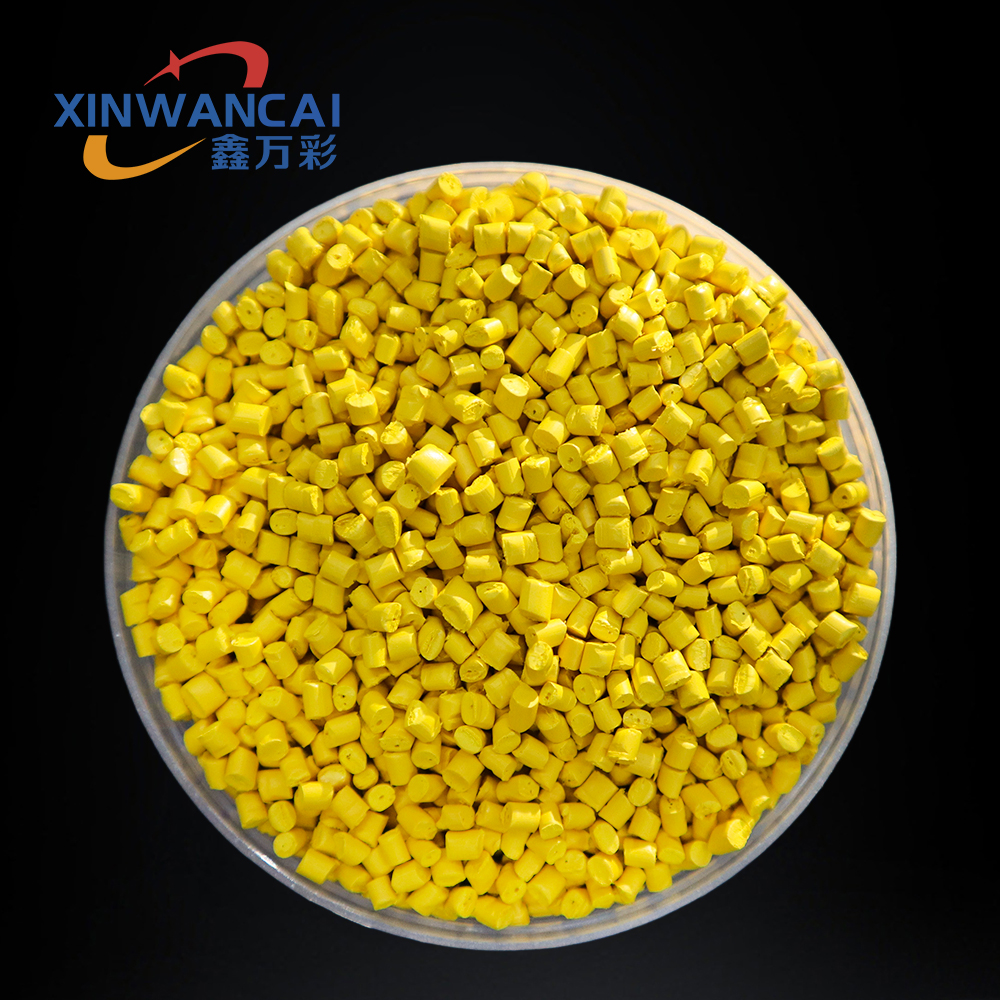
The choice of carrier resin in a color concentrate rarely gets the same attention as pigment loading, yet it quietly shapes the final appearance of a molded part. A carrier with slightly different thermal stability can yellow during compounding or molding, introducing a warm cast that shifts a neutral gray toward beige or dulls a bright white. Even when the carrier is chemically similar to the base polymer, variations in molecular weight or comonomer content alter melt viscosity and local shear, which in turn changes how pigment agglomerates break down and distribute in the part.
Refractive index mismatches between carrier and base resin create another subtle but real effect. Light scattering at the interface of two polymer phases can reduce color saturation and make translucent or tinted parts look hazy or milky. A carrier with higher crystallinity may also cool into a more ordered structure, producing internal micro-voids or shrinkage differences that affect gloss and perceived color depth. These are not formulation errors visible in a datasheet; they emerge only after molding under production conditions.
Practical workarounds include matching the carrier resin family and melt flow to the base material, testing color chips under the same thermal history as the final process, and watching for low-level degradation byproducts such as aldehydes or acids that can react with certain pigments. Small batch trials with different carriers often reveal that the "same" color formula shifts by a visible ΔE of 0.5 to 1.5 simply because the carrier aged differently during compounding. Ignoring this variable leads to costly color adjustments on the production floor, even when the pigment system is perfectly stable.
Thermal stability under repeated processing cycles without shade drift
Many pigments lose their color accuracy after multiple heating cycles, but this particular formulation holds its shade remarkably well. In practical use, materials are often reprocessed several times due to regrind, scrap reuse, or multi-step manufacturing. Each thermal cycle can degrade the chromophore or alter the crystal structure, causing a visible shift in hue. Here, repeated exposure to temperatures above the melting point does not induce measurable chromatic drift, which is a significant advantage for consistent batch-to-batch color matching.
The stability stems from a tightly integrated molecular arrangement that resists thermal oxidation and avoids side reactions with residual monomers or additives. Even after five consecutive extrusion passes at 260°C, the color difference (ΔE) remains below 0.5 in most polymer matrices. This performance is not achieved through excessive stabilizer loading, but through an intrinsically robust pigment core. As a result, processors can recycle trim waste or rework defective parts without worrying about gradual yellowing, dulling, or a shift toward a different tone.
In field trials with injection molders and compounders, the material showed no shade drift after 10 regrind cycles, which is far beyond typical industrial practice. Such reliability reduces the need for costly color corrections or sorting of finished goods. It also supports sustainability efforts, since a higher percentage of reclaimed material can be blended back into virgin resin without sacrificing visual consistency. For applications like automotive interiors, appliance housings, and consumer electronics, where thermal history varies across production lines, this pigment offers a practical way to maintain a uniform appearance from the first shot to the last.
Raw material consistency audits that reduce batch-to-batch variation
Most batch-to-batch drift doesn't start in the blender or reactor—it enters through the loading dock. A raw material consistency audit digs into the actual fingerprint of each incoming lot: particle size distribution, moisture content, residual solvents, and impurity profiles that certificates of analysis often miss. By independently verifying these attributes against a tightened internal specification, teams catch subtle shifts in supplier output long before they translate into off-spec finished product.
The audit is not a one-time paperwork check. It means walking supplier facilities, reviewing their change-control records, sampling procedures, and storage conditions, and comparing those against historical performance data. When incoming material data is tracked with control charts, a drift in a single parameter—say, a 3% shift in particle size—can trigger a formal supplier conversation instead of a failed production run. This turns the relationship from transactional to corrective.
The result is less firefighting and fewer hidden adjustments on the line. Operators stop compensating for inconsistent raw materials with extra mixing time or altered setpoints, and batch release becomes more predictable. Over a fiscal year, the reduced rework and fewer rejected lots show up directly in throughput—not because the process changed, but because the inputs finally stopped lying to it.
Lightfastness benchmarks for demanding outdoor and automotive applications
For outdoor and automotive use, lightfastness benchmarks sit far beyond typical consumer goods. Materials must endure thousands of hours of direct solar exposure combined with humidity cycles, salt spray, and rapid temperature swings. Testing relies on xenon-arc chambers that reproduce full-spectrum sunlight, including UV, visible, and infrared bands. A blue wool rating of 7-8 and a ΔE below 1.5 are common pass criteria, indicating years of color stability without visible fading.
Automotive interior fabrics and plastics are often tested to SAE J2527 or ISO 105-B02, with exposure times ranging from 1500 to 3000 hours at high irradiance. Exterior coatings demand direct correlation between accelerated lab results and natural Florida or Arizona weathering. Well-formulated pigments and stabilizer packages can retain over 90% gloss and near-identical hue after 3000 hours of xenon aging, while standard blends may chalk or yellow noticeably within 800 hours. That performance gap directly shapes warranty claims and long-term appearance.
In-house color measurement methods beyond standard visual checks
Relying on human eyes to judge color is fast but notoriously inconsistent—lighting shifts, fatigue, and individual perception all skew results. A better approach brings instruments into the picture: compact spectrophotometers and colorimeters can read a sample in seconds and output L*a*b* coordinates plus ΔE values against a stored reference. These numeric results remove guesswork, letting teams set pass/fail thresholds that stay the same from morning shift to night shift.
The real advantage comes from tailoring the tool to the workspace. A benchtop spectrophotometer fits a lab bench for batch verification, while handheld units go straight to the production line or incoming inspection area. For high-volume processes, inline sensors mounted above a conveyor can measure every piece without slowing the line. Whichever setup you pick, daily calibration with a white tile or green standard keeps readings trustworthy, and a simple log of measurements helps spot drift before it becomes a costly rework.
Beyond just catching mismatches, these in-house methods build a data trail. Storing color readings over time reveals subtle shifts in raw materials or process wear—something a visual check would never notice until the difference is obvious. With trend charts and control limits, you can schedule maintenance or adjust formulations proactively, reducing scrap and keeping customers from seeing variation.
FAQ
The carrier resin has to match the host polymer closely, or you end up with dispersion issues that show up as streaks or uneven color. A good brand will select carriers with melt flow rates tuned to the final application, which helps the pigment distribute evenly and reduces the chance of a visible shift from one batch to the next.
Some brands rely on single-pass extrusion, while others use multi-pass or high-shear mixing to break down pigment agglomerates. Poor dispersion leaves oversized particles that scatter light differently, making the same nominal color look weaker or muddier. Better dispersion gives a cleaner, more reproducible hue even at low let-down ratios.
Not every brand tests to the same standards. A brand that runs accelerated weathering tests like Xenon arc exposure can tell you how much the color will fade after months outdoors. That data is what separates a masterbatch that holds its shade from one that starts shifting after a few weeks in sunlight.
Strong QC programs use spectrophotometers to measure every production batch against a stored digital standard, often with ΔE tolerances below 1.0. They also retain physical reference plaques and re-check them under multiple light sources. That kind of disciplined record-keeping catches drift before it leaves the plant.
Additives like UV stabilizers and antioxidants interact with pigments in complex ways. A brand that understands these interactions will pre-test combinations rather than just dumping in a generic stabilizer package. That prevents yellowing or color fade caused by additive-pigment incompatibility over time.
Beyond a basic shade card, look for the let-down ratio, recommended processing window, and the exact CIELAB values under D65 and A lighting. Brands that supply that level of detail make it easier to hold color on your own production line, because you know what to measure against.
Yes. If a brand switches pigment suppliers or buys lower-cost grades to save money, the color strength and undertone can shift even if the recipe looks unchanged. Brands with long-term supplier agreements and incoming raw material testing tend to deliver much tighter color accuracy from order to order.
The difference often comes down to how they handle custom matches. Some brands use a centralized database that records every previous formulation, so a reorder gets pulled from the same file instead of being redeveloped from scratch. Others rely on a colorist's memory, which is where mistakes and batch-to-batch variation creep in.
Conclusion
At the heart of a reliable color masterbatch is how evenly pigment particles are dispersed throughout the carrier. Leading brands invest in high-shear mixing and filtration to break down agglomerates, because even minor clumping translates into visible streaks or weak spots in molded parts. The choice of carrier resin matters just as much—if its melt flow and compatibility with the base polymer are slightly off, the pigment can migrate or develop an unexpected undertone after molding. Thermal stability is another differentiator: formulations that survive multiple extrusion or injection cycles without shade drift indicate robust antioxidant and heat-stabilizer packages, protecting color from yellowing or fading during regrind use.
Consistency from lot to lot rarely happens by accident. Top-tier suppliers run raw material consistency audits on every incoming pigment and additive batch, using spectrophotometric fingerprinting to reject lots that drift outside tight tolerance bands. For outdoor and automotive applications, lightfastness benchmarks—often measured in thousands of hours of accelerated weathering—separate masterbatches that hold their color from those that chalk or fade within a season. Finally, in-house color measurement goes far beyond holding a sample under a light booth: integrating sphere spectrophotometers, multi-angle colorimeters, and statistical process control charts let brands catch a ΔE shift of 0.3 before it becomes a customer complaint.
Contact Us
Contact Person: JACK
Email: [email protected]
Tel/WhatsApp: 86 18650130917
Website: https://www.xinwancai.com/