

China Vacuum Casting Services Company for Precision Prototyping and Low-Volume Production
2026-11-16
You've probably heard the same pitch from a dozen prototyping suppliers: 'low-volume production, fast turnaround, high accuracy.' Then the samples arrive and something's off—warpage, surface porosity, a fit that's just not quite right. Vacuum casting is supposed to solve that, but only if the shop actually controls the process. ProtoMat is a China-based vacuum casting services company focused on precision prototyping and low-volume production, and it caught our attention because it doesn't treat every project as a one-size-fits-all job. From silicone tooling to polyurethane resin selection, their workflow is tuned for dimensional stability and cosmetic finishes that can't be an afterthought. Curious how they avoid the usual pitfalls? Here's what we found.
Skip the Steel Tool, Not the Precision
For decades, machinists assumed that only a steel tool could hold tight tolerances. That assumption is starting to crack. Carbon-fiber and ceramic options now match or beat steel in many setups—because they flex less under heat or vibrate less at high speeds. The result is a cleaner cut without the weight penalty.
Think about small-batch electronics work, where a steel tool might introduce unwanted magnetism or scratch soft contacts. A high-grade plastic or titanium pick can get into tight spots without leaving behind metal dust. The precision comes from the tip geometry and your hand control, not from the raw material.
The real takeaway isn't to throw away your steel kit. It's to stop treating material as the only path to accuracy. Test a few non-steel options on your next delicate job—you might find that skipping the steel doesn't mean skipping a single micron.
Batch Sizes from One to Hundreds, Handled
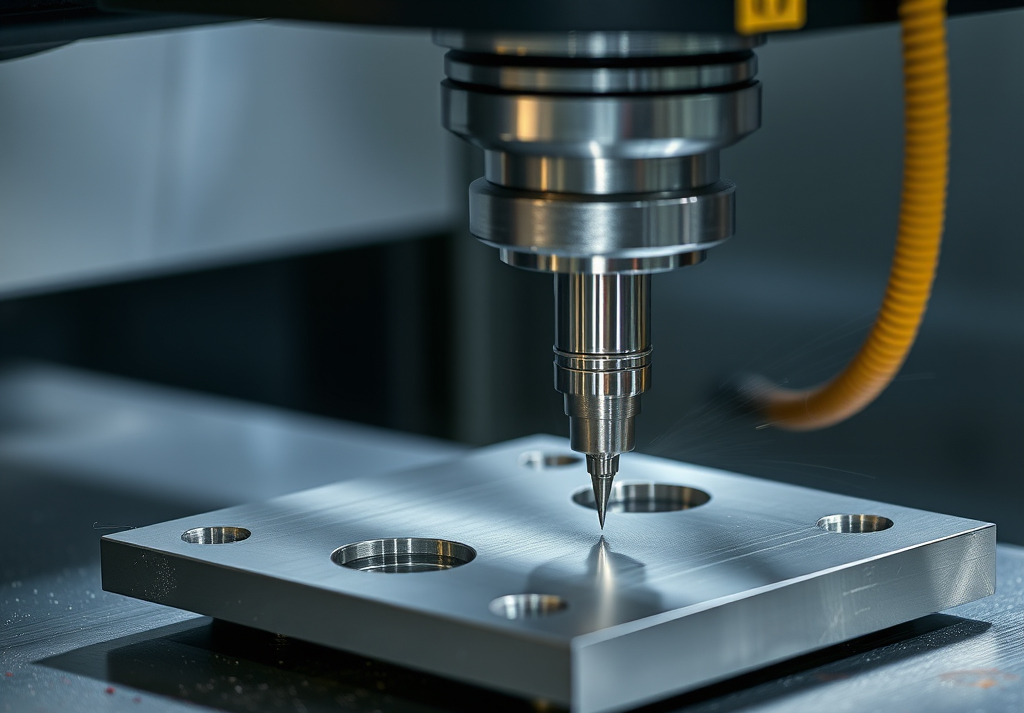
Most shops fumble when the order sheet flips between a single custom piece and a full production run. Here, that shift is baked into the floor rhythm. A one-off gets the same careful toolpath review as a 300-unit batch, but the workflow adjusts on the fly so neither setup time nor material waste spirals out of control.
You will not see a lone prototype parked behind a 500-piece job just because it is small. Instead, the schedule treats each order by its actual demands: quick fixturing for low counts, tighter repeatability checks for high counts, and a clear handoff between programming and the machine cell. That is why a single test part can ship the same week while a 200-piece order runs with consistent dimensions from first to last.
Thin Walls, Deep Undercuts, No Problem
Molding a wall that barely outpaces a business card isn't about luck. It's about keeping fill speeds high enough to freeze the skin late, while packing pressure stays low enough that the steel doesn't flex. We've dialed in vent depths and gate placement so ribs as thin as 0.4mm come out flat, without sink or weld-line shadowing.
Deep undercuts usually force a choice: lose the detail or pay for secondary handwork. Ours doesn't. The tooling uses split lines and lifter geometry that release undercut features in the mold itself, even when the undercut runs past what most shops consider safe. Parts drop out with the undercut surface clean and no pull marks, ready for coating or assembly as-is.
Over 50 Resins to Match Your Part's Job
When a part needs to survive heat, resist chemicals, or flex under load, the material choice becomes the quiet architect of its performance. Our catalog spans more than fifty resin formulations, each one tuned to a specific set of demands rather than a generic middle ground. From glass-filled nylons that shrug off fatigue to crystal-clear polycarbonates built for impact, the range exists so you rarely have to compromise between what the design asks for and what the material can deliver.
The real value shows up in the details: a snap-fit that doesn't embrittle after a thousand cycles, a housing that stays dimensionally stable in humid assembly lines, or a medical grip that holds up to repeated autoclave sterilization. Instead of reverse-engineering your part to fit a limited resin list, you can pick the grade whose viscosity, shrinkage, and additive package already align with the geometry and load path. That means fewer mold revisions and less time explaining why a perfectly good design failed in the field.
We keep the comparison straightforward, showing you not just datasheet values but how those numbers translate to real parts under real conditions. Whether you need a UL-rated flame-retardant compound, a food-contact-safe option, or a specialty blend that bonds well with overmolded TPE, there is a starting point that feels less like a compromise and more like a match made intentionally.
Design to Delivery in Under a Week
Most teams assume a tight timeline means cutting corners, but hitting a seven-day design-to-delivery window actually forces sharper decisions. We strip away the endless revision loops and focus on the few interactions that truly matter to users. That means prototyping directly in code from day one, not waiting for pixel-perfect mockups, so the whole team can test real flows by Tuesday morning.
The trick is overlapping phases instead of running them in sequence. While the interface is being refined, front-end and back-end work already starts against a shared component library. Daily standups become 15-minute alignment checks rather than status reports. By Thursday, we're not asking "is the design final?" but "what do we need to fix before launch tomorrow?" That shift in mindset turns a deadline from a threat into a focusing tool.
A one-week sprint also reveals what your process can live without. We've shipped products with three review cycles instead of ten, and nobody missed the extra meetings. The result isn't a rushed mess—it's a leaner, more honest version of your idea, delivered while the momentum is still hot.
Finishes Ready for Paint, Chrome, or Texture
Whether you plan to spray a custom color, wrap with a metallic chrome film, or add a textured coating, these surfaces come prepped to accept your chosen finish without extra sanding or priming. The base material is smooth and free of mold release residue, so adhesion is consistent from edge to edge. This saves time in the booth or workspace and reduces the risk of fisheyes or peel later on.
For painters, the ready-to-shoot state means you can go straight to sealer or basecoat. Chrome applicators will appreciate the lack of surface waves that often show through bright films. If texture is your route—whether stone, rubberized, or fine grain—the uniform porosity helps the product lock in evenly. You're not fighting against glossy spots or uneven absorption.
One overlooked benefit is how forgiving the surface is during test panels or color matching. Since the substrate is consistent, differences in the final look come from your technique, not hidden contamination or leftover release agents. That kind of predictability is hard to find in off-the-shelf parts.
FAQ
We generally supply silicone molds and cast polyurethane parts in small batches, usually from one to fifty pieces. The process lets you evaluate fit, function, and surface quality before committing to hard tooling. Most projects start from a master pattern, often 3D printed or CNC machined.
Typical tolerances are around plus or minus 0.2 millimeters or about 0.3 percent of the nominal dimension, whichever is larger. For small to medium parts this is usually enough for form and fit checks, though it will not match CNC machining for very tight features.
We cast a range of polyurethane resins that mimic common thermoplastics such as ABS, polypropylene, polycarbonate, and nylon. Shore hardness can vary from soft rubber around 20A to rigid plastic near 90D, and we can also tint the resin or add fillers for specific mechanical properties.
A standard run of up to thirty or forty parts usually ships within seven to fifteen working days after the master pattern is approved. The silicone mold itself takes about two to four days to produce, and each mold can yield roughly twenty to thirty castings before wear becomes visible.
Vacuum casting avoids the high tooling cost of steel injection molds, so it makes sense when you need only a few dozen parts. The trade-off is a higher per-part cost and a softer mold material, so it is not the right choice for very high volumes or parts with extremely tight tolerances.
You can get finishes from matte to high gloss, and we often match the surface of the master pattern. Light texture or fine grain is possible if it is present on the pattern, but deep textures and sharp corners may tear the silicone mold, so we usually soften those features in the pattern.
Yes, within reason. The silicone mold is flexible, so simple undercuts and snap features can often be pulled out without damaging the part. Very deep undercuts or rigid internal threads still require inserts or a redesign, because the mold is not as stiff as metal tooling.
The main saving comes from lower labor and material overhead, which lets us offer silicone molds and cast parts at a fraction of Western quoting prices. You still get fast turnaround and comparable resin options, but you should factor in shipping time and communicate clearly on tolerances before the order starts.
Conclusion
China vacuum casting services offer a practical shortcut for precision prototyping and low-volume production, letting you skip the steel tool without sacrificing dimensional accuracy. Unlike traditional injection molding, this process uses silicone molds to reproduce intricate details from a master pattern, so even thin walls, deep undercuts, and complex geometries come out clean. It is a smart choice when you need parts that behave like production thermoplastics but cannot justify the cost or lead time of hard tooling. With over 50 castable resins available, you can match mechanical properties, heat resistance, or clarity to the job, whether it is a snap-fit housing, a transparent lens, or a rubber-like gasket.
Batch sizes from one to hundreds are handled without retooling, which means you can validate a design, run a pilot, or bridge into low-volume manufacturing from a single mold. The typical design-to-delivery window is under a week, keeping development cycles tight. Finishes are ready for paint, chrome plating, or texture, so prototypes can pass for final products in user tests or marketing samples. Working with a China-based supplier adds cost efficiency and fast communication, but the real advantage is the balance of flexibility and fidelity. You get the look, feel, and function of injection-molded parts without the long wait or upfront investment, making vacuum casting a reliable step between a 3D print and full-scale manufacturing.
Contact Us
Contact Person: Joe
Email: [email protected]
Tel/WhatsApp: +8613799507208
Website: https://www.3dprotomat.com/