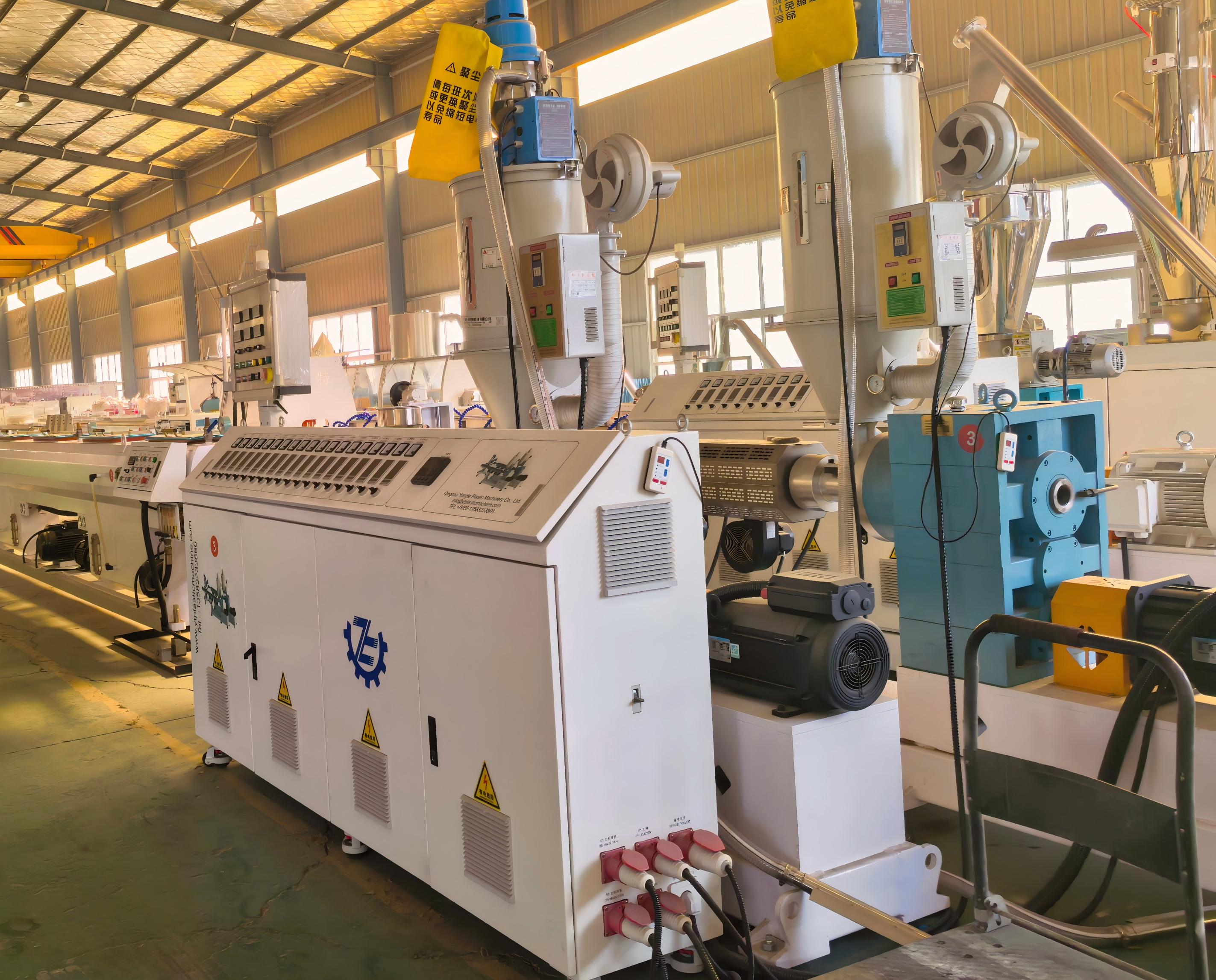

China PE Pipe Machine Advancements for Modern Manufacturing
2026-11-02
The evolution of China's PE pipe machinery has quietly reshaped how modern factories think about efficiency and precision. No longer just about output volume, today's systems from leaders like Yongte are pushing the boundaries of what's possible in extrusion consistency and energy use. If you've been wondering why some manufacturers suddenly leap ahead in product quality while cutting waste, the answer often lies in the machine room—not the boardroom. Let's take a closer look at the advancements driving this shift.
Servo-Driven Extruders: The Quiet Shift Changing PE Pipe Output
Across pipe extrusion plants running PE100 and PE4710, the swap from hydraulic to servo-driven extruders happens without fanfare. A maintenance manager might notice fewer oil leaks on the floor and a quieter drive train, but the real shift shows up in the melt stream. Servo motors hold screw speed within a fraction of an RPM, and barrel zone temperatures stay tighter because there's no hydraulic fluid cycling through heat exchangers. For operators, that translates into less babysitting of the control panel during a 24-hour run and fewer unexplained pressure spikes that used to force a line shutdown.
The effect on wall thickness consistency is where servo drives pay for themselves. Traditional hydraulic systems react to load changes with a lag, letting the die head pressure drift as regrind percentages shift or the extruder feeds a new batch of resin. A servo-driven screw corrects speed almost instantly, keeping melt pressure flat enough to hold dimensional tolerances that inspectors check with ultrasonic gauges. Plants running large-diameter water and gas pipe report fewer sections rejected for ovality or thin spots, and some have nudged line speeds up by five to ten percent without increasing scrap.
Energy use and maintenance add another layer of savings. A servo drive draws only what the screw demands, so idle periods and low-output jobs don't burn power the way a constantly running hydraulic pump does. There's no filter cart to change, no oil to sample for wear particles, and no valve block to rebuild every few years. Retrofits on older lines often recover their cost within two to three years, mostly from lower electricity bills and reduced downtime. It's not a flashy change, but for PE pipe producers chasing tighter margins, the quiet conversion to servo control keeps compounding.
Real-Time Melt Pressure Control and Why It Matters for Wall Consistency
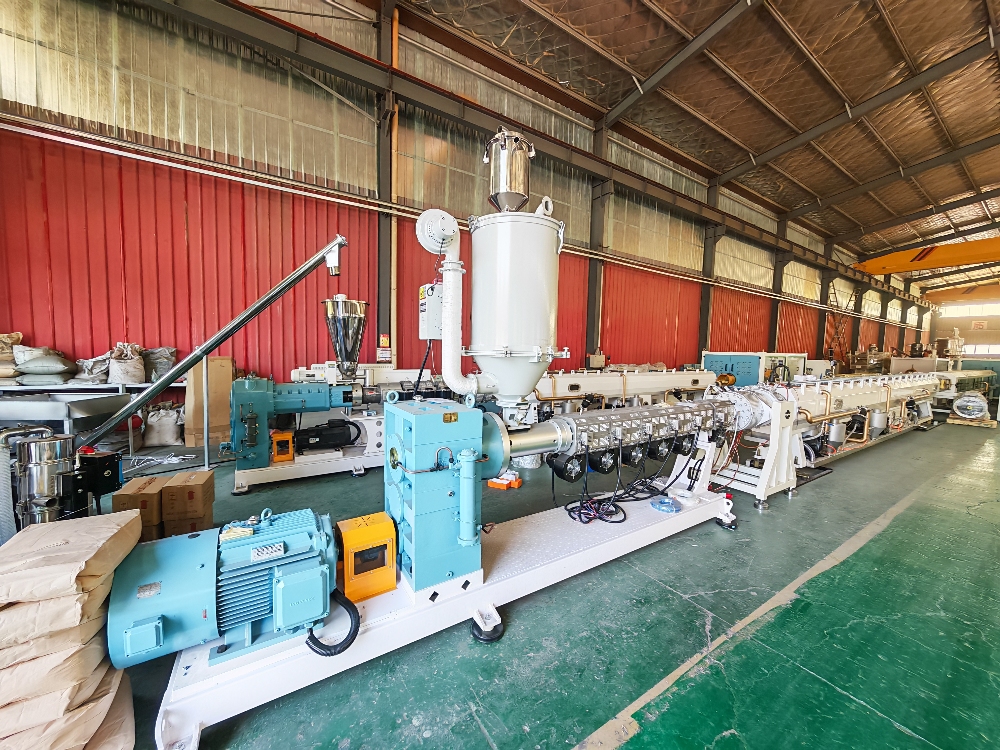
Maintaining a stable melt pressure at the die is not simply a matter of machine settings—it is a dynamic process that directly governs how evenly the polymer flows through the annular gap. Without real-time adjustment, even minor fluctuations in screw speed, barrel temperature, or feedstock viscosity translate into visible thickness variations along the pipe or profile wall. By continuously monitoring the pressure transducer signal and feeding it back to the extruder drive, the control loop can compensate for these disturbances within milliseconds, holding the melt delivery rate steady. This active correction prevents the characteristic thinning or bulging that often appears when operators rely on manual tweaks or open-loop operation.
The relationship between pressure stability and wall consistency is particularly evident in thin-wall or tight-tolerance applications such as medical tubing or multi-layer barrier pipe. Here, a pressure deviation of only a few bar can push the wall thickness outside the acceptable range, leading to weak spots, ovality, or excessive material usage. Real-time control systems that modulate screw RPM or backpressure based on melt pressure readings create a closed feedback environment where the extruder continuously adapts to material lot changes, regrind content, or even ambient temperature shifts. As a result, the parison or tube exiting the die exhibits a uniform cross-section, reducing scrap and downstream rejects while eliminating the need for constant manual intervention.
Beyond immediate dimensional benefits, live melt pressure management also protects the process from drift over long production runs. Without such control, gradual changes in melt viscosity—caused by filler dispersion, moisture pickup, or screw wear—can go unnoticed until the wall thickness has already drifted out of spec. A responsive pressure loop catches these slow trends early, nudging the extruder speed or temperature profile to maintain a constant pressure at the die entry. This preemptive adjustment keeps wall consistency locked in from start-up to shutdown, even when the raw material characteristics shift slightly between batches. For manufacturers aiming to reduce material consumption while increasing line speed, real-time melt pressure control is the unseen backbone that makes every millimeter of the product repeatable.
Energy Recovery Systems That Make Older PE Lines Look Wasteful
Older polyethylene extrusion lines often run like open faucets, bleeding thermal and mechanical energy into the plant as heat, noise, and scrap. Modern energy recovery systems flip that equation by capturing waste streams and feeding them back into the process. From regenerative drives that convert braking energy into usable power, to heat exchangers that preheat raw material using barrel radiation, these upgrades quietly turn what used to be overhead cost into a second energy source.
The real difference shows up in continuous operation. A legacy PE line might discard enough hot air and water to heat an entire warehouse, while a retrofitted line reclaims that thermal load to cut extruder warm-up times and stabilize melt temperatures. This not only shrinks the utility bill but also reduces thermal cycling stress on screws and barrels, which means fewer unscheduled stops and a steadier output rate per kilowatt consumed.
What makes older lines look wasteful is not just the missing hardware, but the missed compounding effect. When recovered energy lowers peak power demand and shortens cooling cycles, operators can increase line speed without upgrading the main electrical feed. That practical headroom—earned through smart retrofits rather than new capital equipment—lets a decades-old PE line run closer to the efficiency of brand-new machinery, while keeping the original infrastructure in place.
How Chinese Manufacturers Are Solving the Micro-Crack Problem
Across industrial hubs like Shenzhen and Ningbo, factory floors have quietly shifted from reactive patching to proactive micro-crack control. Instead of waiting for hairline fractures to appear in finished components, engineers now embed acoustic emission sensors directly into casting and injection-molding lines. These sensors pick up the faint elastic waves released when a micro-crack nucleates, often days before it becomes visible under a microscope. One electronics enclosure maker in Dongguan reported that this real-time listening approach cut its post-production rejection rate by nearly a third, simply because operators could adjust cooling rates or pressure profiles mid-cycle rather than after a batch had already cured.
Material science has also moved to the foreground. Chinese suppliers working with high-performance ceramics and aluminum alloys now blend in sub-micron carbide or graphene platelets that act as crack-bridging agents. Rather than trying to eliminate every stress concentrator, these additives distribute strain more evenly across grain boundaries, so a micro-crack that starts in one region loses energy before it can propagate. A producer of lithium battery casings in Changzhou found that switching to a graphene-reinforced aluminum composite not only reduced micro-crack density by over forty percent but also allowed for thinner walls without sacrificing crush resistance.
Process redesign completes the toolkit. Some manufacturers have abandoned single-shot cooling in favor of gradient thermal management, where parts move through several temperature zones to relax internal stresses gradually. Others now use low-pressure overmolding or ultrasonic vibration during solidification to break up dendritic structures that typically host early-stage cracks. In injection-molded polycarbonate lenses, for instance, applying gentle ultrasonic agitation to the melt before it enters the mold produced parts with measurably fewer micro-voids and surface fissures, even after accelerated thermal cycling tests. These quiet changes rarely make headlines, but they show how Chinese factories are treating micro-cracks not as an inevitable defect, but as a solvable process variable.
The Role of Co-Extrusion in Multi-Layer PE Pipe Production
Multi-layer polyethylene pipes rarely rely on a single formulation. The outer layer might be tailored for UV and impact resistance, while an inner layer handles chemical contact or high-purity water. Co-extrusion allows these distinct PE grades—or even PE combined with tie resins and barrier polymers—to be fused in one continuous operation. Instead of laminating pre-formed tubes, the molten layers meet inside a single die, forming a bond that is both molecular and structural. This eliminates secondary adhesive steps and keeps wall thickness more consistent than post-assembly methods.
One of the less obvious advantages is how co-extrusion opens up material savings. A pipe can use a foamed or recycled PE core sandwiched between thin virgin skins, cutting weight and raw material cost without sacrificing pressure rating or surface finish. The process also makes it easier to incorporate oxygen barrier layers, like EVOH, where local codes demand them. Because the layers are combined while still above melt temperature, the interface is less prone to delamination than glued or wrapped alternatives, which matters in long-term buried service.
From a production standpoint, co-extrusion demands careful control of melt temperatures and viscosity matching. If two adjacent layers have very different flow behavior, the interface can become wavy or even break inside the die. That is why many processors run dedicated extruders per layer and use feedback from melt pressure sensors to adjust screw speed in real time. When dialed in, the result is a pipe that meets multiple performance requirements at once—strength, chemical resistance, UV stability, and cost efficiency—without separate manufacturing stages.
From Batch Testing to Inline Quality Gates: A New Standard
The old way of ensuring quality often meant waiting until the very end. A batch of components, a release candidate, or a full production run would be collected, then pushed through a gauntlet of checks. By the time a defect surfaced, it had already been replicated across hundreds or thousands of units, and the cost of correction rippled backward through the entire process. Batch testing gave you a verdict, but it rarely gave you time to act.
Inline quality gates flip that sequence. Instead of a single checkpoint at the finish line, they embed verification directly into the workflow. As each unit passes a critical operation—whether that's a solder joint, a code merge, or a dimensional tolerance—the gate evaluates it against the standard. If the result falls outside the accepted range, the line pauses, the build is flagged, or the operator is alerted before the next step begins. The feedback loop shrinks from days or hours to seconds.
Adopting this model changes what quality means to an organization. It stops being a sorting exercise that separates good output from bad and becomes a control system that prevents bad output from ever gaining momentum. That shift demands more than new tools; it requires a different mindset, one where every stage owns its own quality threshold. The technology to support inline gates has matured enough that this is no longer an aspirational benchmark. It's the new baseline for anyone serious about consistent output.
FAQ
Several builders now use grooved barrel feeding sections paired with dedicated high-torque gearboxes, letting lines run HDPE and MDPE at higher screw speeds without surging. Some have also moved to quick-change screen changers and dual-station winders, so coil changeovers happen in under a minute.
Most lines rely on vacuum sizing tanks with split calibrators and servo-driven caterpillar haul-offs. Switching from 20 mm to 630 mm pipe often involves changing the calibrator sleeves and die head inserts, then adjusting the pulling force. The latest systems save recipes digitally, so operators recall a full parameter set instead of tuning by hand.
Automation is no longer just a PLC display. Gravimetric dosing units link to the extruder to keep melt pressure steady, ultrasonic wall-thickness scanners feed live data back to the haul-off speed, and some plants use centralized MES dashboards to track per-meter energy use and reject rates without stopping production.
Delivery times have shrunk dramatically, and suppliers now offer localized service teams and spare parts hubs in regions like Southeast Asia, the Middle East, and South America. The machines also arrive with CE-certified electrical panels and documentation, which removes a major barrier for overseas buyers who previously worried about compliance.
A modern 75 mm line often runs at 0.28-0.32 kWh per kilogram of HDPE pipe, while a decade-old equivalent might draw 0.40 kWh or more. The savings come from induction-heated barrels, optimized screw geometry, and variable-frequency drives on every motor, including the vacuum pumps and chillers.
Inline systems now combine laser diameter gauges, thermal cameras, and pressure sensors at the die. Some machines log every meter with a time stamp, allowing traceability from raw material batch to final coil. If wall thickness drifts outside tolerance, the line automatically adjusts haul-off speed or triggers an alarm before scrap is produced.
Yes, but it depends on the screw design and melt filtration. Many suppliers offer vented barrels and dual-channel screws for mixed-regrind HDPE. With a continuous backflush screen changer and a gear pump after the extruder, lines can run up to 40% recycled content while keeping pressure fluctuations below 2%, which is sufficient for non-pressure drainage pipe.
Instead of copying generic 30 L/D screws, several manufacturers use computational fluid dynamics to create barrier flights and mixing sections that lower melt temperature by 5-8°C at the same output. The barrels often have a bimetallic lining with a hardness above 1000 HV, which extends life when running abrasive compounds.
Conclusion
China’s PE pipe machinery has made a quiet but decisive move toward servo-driven extruders, replacing fixed-speed motors that wasted energy and limited responsiveness. The torque curve of a servo unit lets operators fine-tune screw speed in small increments, which shows up directly as smoother inner and outer surfaces. Paired with this, real-time melt pressure control acts as a closed loop: pressure transducers near the die send signals that adjust screw rpm and barrel temperature, keeping wall thickness stable even when raw material viscosity shifts. Energy recovery systems scavenge heat from barrel cooling circuits and feed it back into resin preheating, so a modern line can run 20 to 30 percent lower on total power than an older setup with the same throughput.
The micro-crack problem, once blamed solely on resin grade, is now understood as a cooling and stress-relief issue. Chinese manufacturers use multi-zone vacuum sizing and gradient cooling to let the pipe relax without developing internal fissures. Co-extrusion adds another layer of control: a thin outer skin of virgin PE or a functional barrier can be applied over a recycled core, cutting cost while keeping structural integrity. This multi-layer approach also enables UV-stabilized or oxygen-barrier pipes without a full material change. Inline quality gates have replaced batch sampling in many plants. Laser micrometers and ultrasonic wall-thickness sensors scan continuously, and any drift triggers automatic adjustment of haul-off speed or die centering, so every meter meets spec without waiting for a lab result.
Contact Us
Contact Person: Ms Qin
Email: [email protected]
Tel/WhatsApp: 8613583233866
Website: https://www.yongteplast.com