

China Cast Parts Sourcing Guide for Global Manufacturers
2026-09-26
Most sourcing guides open with fluff. This one opens with a hard truth: China has thousands of casting suppliers, but only a fraction deliver the quality and consistency global manufacturers actually need. This guide cuts through that noise. Created with insight from Zhaoyuqi, it gives you the verification checkpoints, red flags, and practical steps that turn a risky sourcing decision into a reliable supply line.
Reading the Map of China’s Casting Clusters
A glance at the distribution of foundries across China reveals a landscape shaped by decades of industrial growth, where casting clusters have coalesced around transport hubs, raw material sources, and downstream manufacturing bases. The Yangtze River Delta, anchored by Shanghai, Suzhou, and Ningbo, stands out for its dense network of precision casting workshops serving the automotive and electronics sectors. Further north, the Bohai Rim region—stretching from Tianjin through Hebei to Shandong—hosts heavy-duty foundries closely tied to steel production and port logistics. In the south, the Pearl River Delta’s clusters around Guangzhou and Foshan lean toward lighter, high-volume castings for consumer goods and machinery.
The geographic logic behind these clusters is rarely accidental. The Yangtze River Delta benefits from a mature supply chain, advanced engineering talent, and easy access to international shipping lanes, which together support high-mix, high-precision work. The Bohai Rim, by contrast, grew around abundant coal and iron ore, making it a natural home for large iron and steel castings used in mining equipment and infrastructure. Inland clusters in Henan, Shanxi, and Hubei emerged more recently, often as cost-driven alternatives, leveraging local raw materials and lower labor expenses to attract investment from coastal firms looking to expand capacity without sacrificing proximity to central markets.
Yet the map is not static. Environmental regulations have begun to redraw boundaries, pushing older, less efficient foundries out of urban cores and encouraging the rise of designated industrial parks with shared treatment facilities. At the same time, automation and digital process control are gradually shifting the competitive advantage from cheap labor to technological sophistication. Some clusters are responding by specializing—for instance, focusing on ductile iron for wind turbine components or aluminum die casting for electric vehicles. Reading these patterns offers more than a snapshot of current production; it hints at how China’s casting industry might reconfigure itself in the coming decade.
What to Check on the Foundry Floor Before Signing
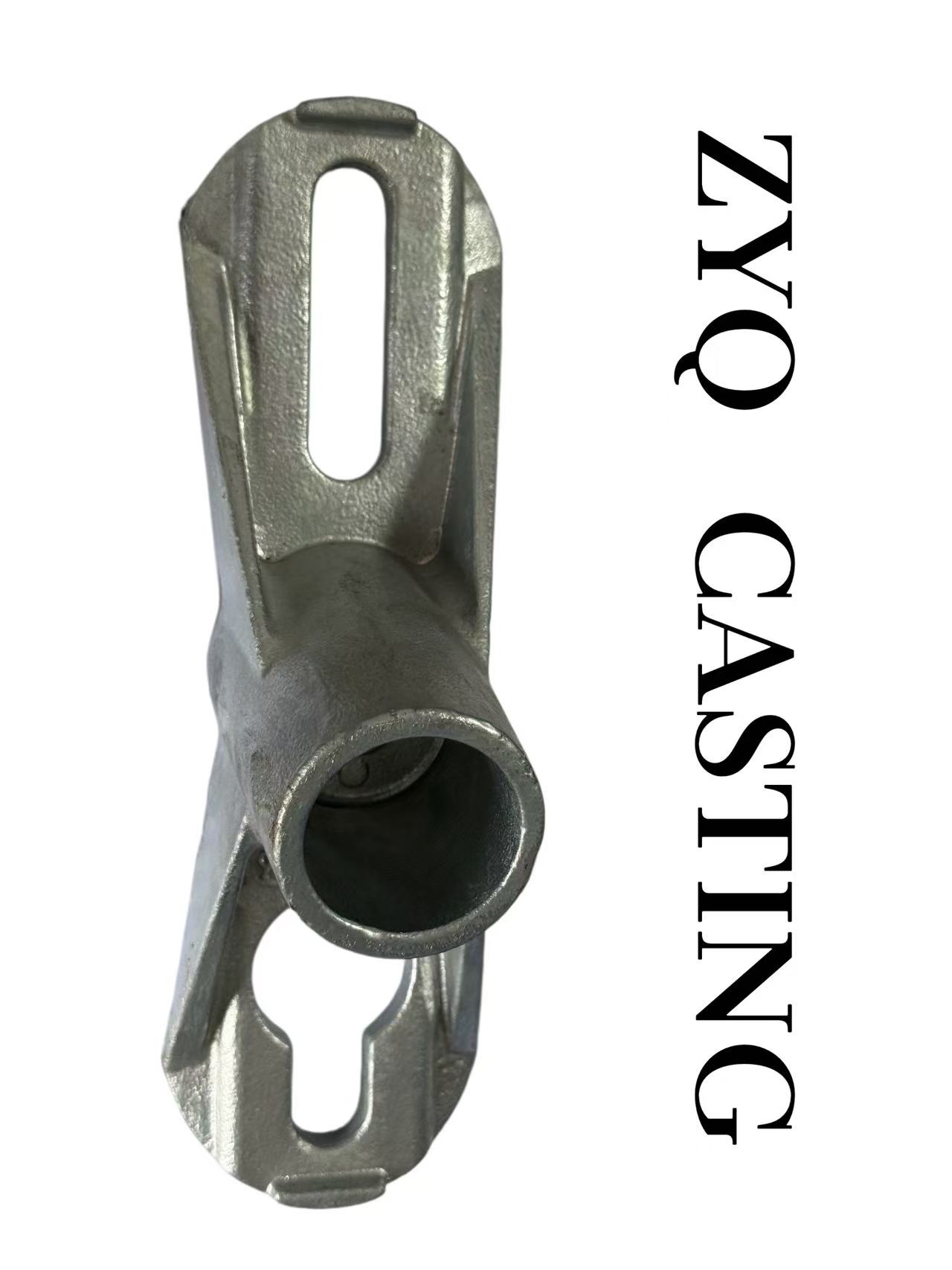
Walking the foundry floor before you put your name on anything isn't about ticking boxes—it's about catching what the reports won't tell you. Look at the sand condition first. Run your hand through a handful of molding sand; it should clump lightly then crumble, not cake like wet clay or blow away dry. Check the pattern plates for wear or loose pins, because a quarter-inch shift there becomes a scrapped casting later. Watch how the molds are being closed and weighted, if the cope and drag meet without gaps or a forced pinch. The best time to stop a bad pour is before the metal ever leaves the ladle.
Pay attention to the temperature and timing at the furnace and the pouring line. Skimming slag off the top isn't enough if the metal sits too long and loses its heat—cold shuts and misruns start showing up in the shakeout pile. Ask the pourer how many molds they've filled since the last ladle refill, not because you don't trust them, but because a good crew will tell you straight when a heat is getting tired. Finally, listen for the sound of the shakeout and the grinding booth. A clean, consistent rattle means the castings are coming out whole; a dull thud or extra grinding sparks suggests you'll be signing off on more weld repairs than you planned.
Alloy Specs That Don’t Get Lost in Translation
When a drawing calls out 6061-T6, the spec rarely travels alone. It drags along a chain of assumptions about composition limits, temper definitions, and test methods that shift subtly from one standards body to the next. A mill in Shanghai might certify against GB/T 3190, while a buyer in Stuttgart expects EN 573-3, and a machine shop in Ohio checks ASTM B209. The alloy number looks familiar, but the allowable ranges for iron, silicon, or magnesium can differ enough to change how the material forms, welds, or anodizes. Keeping a single internal cross-reference table—not just for alloy grades but for the exact clauses that govern them—prevents a “T6” temper from quietly becoming a different heat treatment on the other side of the ocean.
Translation loss also happens at the property level, not just in nomenclature. Yield strength, elongation, and hardness are measured under different specimen geometries, strain rates, and acceptance criteria depending on the standard. A 0.2% offset yield in ASTM E8 is not automatically interchangeable with the Rp0.2 value from ISO 6892-1, even when both are reported in MPa. Engineers who rely on converted tables without checking the underlying test conditions may inherit margins that look safe on paper but disappear on the shop floor. The fix is less about finding a perfect conversion factor and more about pinning every critical property to its original test method and sampling location.
Finally, the human handoff matters as much as the data fields. A spec that survives intact through email chains, ERP systems, and supplier portals tends to be one where each revision note explains why a limit changed, not just what changed. When a foundry adjusts silicon content to improve castability, or a customer tightens a grain size requirement after a fatigue failure, those decisions need to travel with the spec. Otherwise the translation becomes a game of telephone, and the alloy that arrives at the loading dock is no longer the alloy that was designed.
Quality Checks That Run Ahead of the Ship Date
We start final inspections well before the scheduled ship date, not as a last-minute scramble. Each unit goes through a staged review: functional testing after assembly, then a 24-hour burn-in, then a cosmetic pass under bright light. The earlier gate catches most issues while there's still time to rework without pushing the deadline.
For high-priority orders, we also run a secondary audit two days before packing. That includes pulling random samples from the batch and running the same checks again. Nothing leaves the dock until the results are logged and signed off by a lead technician.
The goal isn't to add paperwork; it's to make the ship date boring. When the checks run ahead of it, the ship date is simply the day the box leaves, not the day we discover problems.
Pricing That Holds Up on the Second Order
Many pricing models look great on paper until the first renewal comes around. The real test is whether the numbers still make sense when a customer places a second order. If a low introductory price was the only reason for the initial purchase, churn often follows as soon as the rate normalizes. Sustainable pricing has to account for the full lifecycle, not just the acquisition moment.
Second-order effects show up in ways that don't appear on a spreadsheet. A sharp discount might clear inventory today, but it trains buyers to wait for the next markdown. A per-seat license might generate quick revenue, yet it discourages deeper adoption because every added user becomes a budget conversation. Pricing that holds up is built around consistent value delivery, so the justification for the price strengthens with every repeat transaction.
The most resilient pricing structures are boring in the best way. They don't rely on urgency, scarcity, or creative bundling to work the second time. Instead, they align cost with usage or outcome, making the invoice feel like a fair reflection of value received. When a customer reorders without renegotiating, that's the clearest signal the pricing was designed for the long haul.
Clearing Customs Without Losing Your Timeline
Timing lives and dies in the gap between arrival and release. A shipment that sits three extra days in a bonded warehouse isn't just late—it eats into truck bookings, production windows, and customer trust. Shippers who stay on schedule treat customs not as a checkpoint but as a process they can shape. That means filing an accurate, complete entry before the vessel docks, keeping Harmonized System codes sharp, and having a customs broker who answers the phone before the port asks questions.
The professionals who consistently clear without delays keep a small buffer in their delivery promise—not to excuse slowness, but to absorb the random inspection or missing certificate that no one can predict. They also pre-stage original documents, stay aware of local holidays and shift changes at the border, and build relationships with freight forwarders who know which lanes move faster. A timeline survives customs when you prepare for the ordinary and leave room for the exceptional.
FAQ
Start with a small pilot run and request material certificates plus dimensional reports for every batch. If possible, visit the foundry or hire a local inspector to check the melt records, sand lab data, and finishing area before committing to production volumes.
Match the process to annual volume and surface finish needs. Sand casting works for low-to-medium volume iron or steel parts; investment casting suits complex stainless or alloy parts with tight tolerances; die casting is for high-volume aluminum or zinc components where tooling cost can be amortized over many pieces.
Hebei, especially Botou, has a dense cluster of iron foundries. Ningbo and the surrounding Zhejiang area are strong for precision investment casting and aluminum die casting. Jiangsu and Shandong also have many steel and ductile iron suppliers, but you still need to audit each factory rather than rely on location alone.
Porosity, shrinkage, and off-spec chemistry are common. Ask for X-ray or ultrasonic testing on critical parts, not just visual inspection. For every shipment, compare a sample against the approved dimensional drawing and check hardness or tensile properties if the part is structural.
Write exact material grades and accepted equivalents in the purchase order. If a Chinese foundry proposes a GB grade, ask for a cross-reference table and test report showing it meets your ASTM or DIN requirements. Avoid vague terms like equivalent to without documented proof.
Clarify who pays for pattern/tooling, sample approval, third-party inspection, and rework or scrap caused by foundry errors. Fix the payment schedule around milestones like sample approval and pre-shipment inspection, and agree on penalty terms for late delivery or repeated defects.
Work with suppliers that keep raw material and standard pattern inventory, and lock in a production slot early. For repeat orders, negotiate a rolling forecast so the foundry can pour in advance. Also ask about rapid prototyping or 3D printed patterns for first samples.
Certification helps, but it is not a guarantee. A short on-site audit can reveal whether the foundry actually follows its own process control, how it handles non-conforming parts, and whether the equipment and workforce match the stated capacity. If travel is not possible, use a local third-party audit firm.
Conclusion
Sourcing cast components from China starts long before the first quote lands in your inbox. A practical read of the country's casting clusters shows that geography shapes capability: Hebei and Shanxi dominate iron, Zhejiang and Jiangsu lean toward precision steel and stainless, while Guangdong often handles smaller nonferrous work. But a cluster's reputation means nothing until you walk the foundry floor yourself. Before signing anything, look past the polished meeting room and check how patterns are stored, whether sand labs actually run daily tests, and if the melt shop keeps clean scrap segregated. Those details tell you more than any certificate.
Once production begins, the real risks shift to communication and timing. Alloy specs must survive translation intact—don't rely on shorthand like "304" or "ductile iron" without pinning down the exact grade, heat treatment, and test standard in the purchase order. Quality checks should be scheduled to run ahead of the ship date, not after parts are already boxed, so you have room to correct surface defects or dimensional drift. On pricing, the goal is a number that holds up on the second order, not a teaser rate that quietly climbs once tooling is locked in. Finally, build customs clearance into your timeline from day one by preparing harmonized codes, weight declarations, and origin documents early; the best foundry partnership collapses if a container sits at the port over paperwork. A sourcing guide that treats these steps as one connected workflow—rather than isolated tasks—gives global manufacturers a real edge.
Contact Us
Contact Person: Nico Yin
Email: [email protected]
Tel/WhatsApp: 8618561567088
Website: https://www.ductileironparts.com/