

Best Sheet Metal Types for Durable and Precise Fabrication
2026-08-13
Choosing the right sheet metal isn’t just about thickness—it’s about how the material behaves under stress, heat, and repeated use. At TPS, we’ve seen how the wrong alloy can quietly undermine even the most careful design. In this guide, we break down the top sheet metal types that deliver both durability and the dimensional accuracy your fabrication projects demand.
Why Stainless Steel Earns Its Keep in Precision Shops
Precision shops reach for stainless not because it cuts like butter, but because it holds a tolerance once you've dialed it in. Compared to aluminum or carbon steel, 303 and 316 grades expand and contract far less under the localized heat of a milling pass. That means a bore reamed to size at 9 a.m. is still the same size at 3 p.m., and a part shipped to a customer won't sneak out of spec when the ambient temperature drops. For work that lives or dies in tenths, that predictability is worth every extra minute of cycle time.
The corrosion resistance is another quiet moneymaker. Many precision components sit in damp enclosures, get handled constantly, or face washdowns. Stainless shrugs off those conditions without needing plating or paint, so shops avoid secondary operations and the risk of coating thickness throwing off a critical dimension. Tool wear is real, but it's a known cost—one that buys you a part that won't come back with rust blooms or pitting complaints. That reliability keeps the phone from ringing with rework requests.
The Aluminum Grades That Refuse to Bend Under Pressure
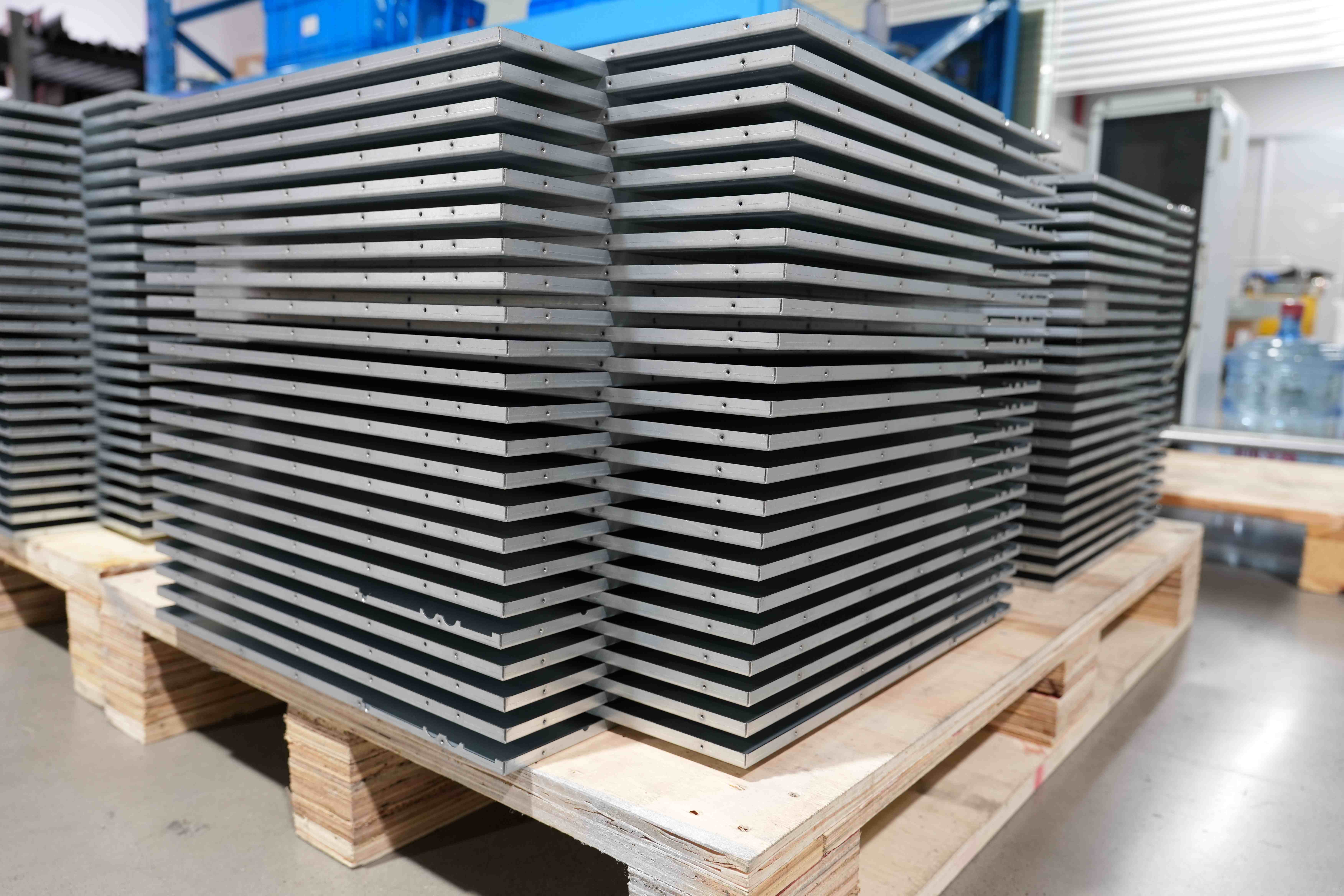
If you've ever watched a CNC spindle push through a block of 7075-T6 and wondered why the tool chatters before the metal gives, the answer lies in the zinc. Alloys like 7075 lean heavily on zinc as the primary alloying element, and after a carefully controlled aging process, they form a dense network of precipitates that lock dislocations in place. The result is a yield strength that can clear 500 MPa—right in the neighborhood of mild steel, but at a third of the weight. That's why you'll find this grade in wing spars, rock climbing cams, and competition bicycle frames where flex is the enemy.
2024 and 7050 don't get the same spotlight, but they're just as stubborn in their own ways. 2024 brings copper into the mix, which boosts fatigue resistance enough to survive decades of pressurization cycles in commercial aircraft skins. Its downside is corrosion, so it's often clad in a thin layer of pure aluminum. 7050, on the other hand, was developed to keep its strength in thick sections—think bulkheads and landing gear forgings—where quenching stresses would normally cause distortion. Both rely on the same fundamental trick: fine precipitates that make the crystal lattice argue with every attempt to bend it.
That said, not every 7000-series alloy is a brick wall. The temper matters enormously. An over-aged 7075-T73 sacrifices a bit of peak strength for dramatically better stress-corrosion resistance, while an under-aged T6 will hold its shape until it suddenly doesn't. And if you're looking for a budget option, 6061-T6 will resist bending reasonably well up to about 270 MPa, but push it past that and it'll fold with a polite groan. If you need something that truly refuses to bend under pressure, you're looking at 7075-T6, 2024-T3, or 7050-T7451—anything less is just aluminum with an opinion.
What Makes Galvanized Sheet a Quiet Contender Outdoors
Galvanized sheet rarely demands attention on a job site, yet it keeps proving itself in places where flashier materials falter. The zinc coating does not just sit there; it actively corrodes first, buying the steel underneath years of extra life without anyone needing to schedule a repaint or replacement. That kind of quiet, sacrificial protection is why you see it on warehouse panels, fence posts, and HVAC ducting — spots that take weather abuse but never make the front page.
Outdoor exposure means moisture, salt spray, and temperature swings that chew through ordinary steel in months. Galvanized sheet handles this by forming a dense, tightly bonded layer of zinc carbonate over time, which slows further attack and shrugs off scratches that would start rust on painted metal. It does not need a controlled environment or special handling to deliver that performance, so contractors keep coming back to it for gutters, animal enclosures, and exterior brackets without a second thought.
The appeal is not just durability but how unassuming the material stays over decades. A galvanized surface weathers to a matte, dove-gray finish that blends into rural and industrial settings, avoiding the loud gleam of stainless or the upkeep demands of raw steel. When the structure finally reaches end of life, the steel is fully recyclable, which adds another layer of practical value that nobody has to advertise. It is the workhorse material that never shouts, but the results speak clearly enough.
Cold-Rolled Steel and the Tolerance Game Most People Ignore
Walk into any machine shop and you'll hear the same assumption: cold-rolled steel is precise, uniform, ready to go. The surface looks clean, the edges crisp, so the tolerance must be tight. But that's where the quiet failures start. A sheet of cold-rolled stock isn't a finished part—it's a promise with fine print. Thickness can vary a few thousandths across the same sheet, flatness drifts after slitting, and that nice bright finish hides residual stress waiting to twist your bracket the moment you cut it loose. Most people never check because they trust the mill certificate like a birth certificate. Then a bearing seat is a hair too loose, a press fit becomes a slide fit, and suddenly you're shimming what should have been dead-on.
The tolerance game on cold-rolled isn't about the nominal number—it's about what happens between the rollers and your fixture. A standard commercial tolerance for thickness might be ±0.005 inch, but that's a full ten-thou window, and nobody reads the fine print on where the variation sits. One batch runs high, the next runs low, and if you're stacking parts or welding a frame, those tenths add up fast. The old machinists know the trick: mic the stock before you trust it, not after the scrap bin fills up. But most designers ignore this until a tolerance stack blows up in assembly, and by then the cold-rolled steel has already won the game you didn't know you were playing.
What gets ignored even more is that cold-rolled steel's tight reputation comes from the rolling process, not from magic. The mill controls thickness under load, but once you release that internal stress through drilling, bending, or even just sitting in a hot shop, the steel moves. A flat plate can cup a few thou overnight. If you need true precision, you don't buy cold-rolled and hope—you plan for a skim cut or stress relief, or you pay for ground stock. The tolerance game isn't about blaming the steel; it's about respecting what it actually is: a semi-finished material with a temper, not a finished answer. Ignore that, and your CAD model will be a lot more honest than the part you end up holding.
Copper, Brass, and the Art of Joining Strength with Detail
Copper and brass have long been paired in metalwork because they bring complementary qualities to a joint. Copper offers remarkable thermal conductivity and a forgiving nature when heated, while brass adds hardness and a warm golden finish. The real craft lies not in simply fusing the two, but in controlling heat, choosing the right filler, and reading how the metals move as they cool. A rushed soldering job leaves weak seams and visible discoloration; a patient hand produces a bond that feels as solid as the surrounding material.
Many techniques can join these metals, yet each one demands its own kind of attention. Capillary soldering pulls molten filler through tight gaps, rewarding clean surfaces and exact alignment. Brazing works at higher temperatures for structural pieces where strength matters more than a seamless look. Mechanical joins—rivets, tabs, folded edges—add a different kind of honesty, letting the fasteners become part of the design. The choice depends on the end use, but in every case the joint should not be an afterthought. It is the moment where the piece either holds together or quietly fails.
Detail shows up in the small decisions: whether to hide a seam under a decorative band or leave the tool marks visible as evidence of handwork. Polishing can erase the subtle witness lines that tell how a part was fitted, while a light patina can emphasize them. Working with copper and brass teaches that strength alone is not enough—the joint must also feel intentional. When the two metals meet cleanly, with edges aligned and heat marks controlled, the result carries a quiet confidence that mass production rarely matches.
Titanium Sheet: The Pricey Shortcut to Zero Compromise
Titanium sheets carry a premium price for a reason—they let engineers skip the usual material trade-offs. Where aluminum dents and steel corrodes, titanium holds its shape and shrugs off saltwater, acids, and body fluids. That upfront cost buys a part that won't need replacement, coating, or constant inspection.
The real shortcut comes from cutting downstream headaches. Machining titanium is slower, but once formed, a titanium sheet resists fatigue and temperature swings that would crack composites or weaken stainless. In aircraft skins, heat exchangers, and surgical implants, the higher material bill is often smaller than the savings from lighter structures, fewer repairs, and longer service intervals.
There's no magic discount. But if the goal is a single material that meets strength, weight, and corrosion specs without compromise, titanium sheet is the fast lane—expensive at the toll booth, yet quicker to a durable final product.
FAQ
301 stainless or titanium usually. Stainless resists corrosion and doesn't warp easily under normal conditions, while titanium is lighter and nearly immune to most environmental damage. For high-precision components, I'd lean toward 301 stainless if budget matters, titanium only when weight or extreme corrosion is a real concern.
Aluminum 5052 or 3003. These alloys bend cleanly and hold tight radii better than 6061, which tends to crack if you're not careful. Cold rolled steel also works but you'll need a larger bend radius to avoid fractures.
Galvanized is cheaper and the zinc coating protects the base steel, but scratches expose raw metal and rust starts. Stainless costs more upfront but doesn't rely on a sacrificial layer. For outdoor enclosures that will see moisture or salt, stainless 304 is more dependable long-term.
Yes, mainly for electrical grounding, heat exchange, or decorative trims. Copper cuts and forms easily, but it's soft, so tight tolerances can drift if you're not careful with tool pressure. It also adds cost, so reserve it for where conductivity or appearance justifies it.
Titanium is the strongest per pound, but it's hard to source and machine. Aluminum 7075-T6 is a practical alternative if you need high strength with low weight, though it can't be welded easily. For most brackets, 5052 aluminum or 304 stainless might be a simpler balance.
Thin gauge cold rolled steel is tricky because heat distortion is common. If you must weld it, use fixturing and skip welding across long seams. Better options are hot rolled steel or thicker aluminum, though aluminum requires TIG or MIG with spool gun experience.
304 stainless and 5052 aluminum both laser cut cleanly and bend well with standard tooling. Avoid galvanized if you can because the zinc coating creates fumes and rough edge quality. Brass also cuts fine but the bent edges can show micro-cracks if the grade is too hard.
Cold rolled steel is hard to beat on price and holds dimensional accuracy after bending. Aluminum 5052 costs a bit more but is lighter and resists corrosion without painting. For prototypes that need to look finished, anodized aluminum usually wins despite the higher material cost.
Conclusion
Stainless steel remains the backbone of precision shops for good reason: its resistance to corrosion and consistent mechanical properties let machinists hold tight tolerances without fighting the material. But aluminum's real advantage is not just lightness—certain grades, like 5052 and 6061, stay flat and stable when others warp under load, making them indispensable for jigs and enclosures that must not bow. Outdoors, galvanized sheet often gets overlooked, yet that zinc layer quietly shrugs off moisture and salt, so it keeps performing where bare steel would rust. And cold-rolled steel is the tolerance workhorse; its smoother surface and more uniform thickness mean the small dimensional errors most people never think about actually stay small.
Copper and brass bring a different kind of precision: they join beautifully through soldering or brazing, letting fabricators combine structural strength with fine detail in heat exchangers and decorative assemblies. Then there is titanium sheet—expensive, yes, but it removes the usual compromises between weight, strength, and corrosion resistance, so for demanding aerospace or medical work the higher upfront cost becomes a shortcut to a finished part that performs exactly as intended. Across all these metals, the best choice depends less on a single "best" label and more on matching the material's hidden strengths to the specific demands of durability and dimensional control.
Contact Us
Contact Person: Lily
Email: [email protected]
Tel/WhatsApp: +49 (0) 2161 49526-0
Website: https://tps-elektronik.com/en/