

Best Quality Shoelace for Everyday Comfort and Durability
2026-11-16
I used to think a shoelace was just a shoelace—until a mid-stride break left me limping home with a makeshift knot. That day, I started paying real attention to what keeps my shoes secure and comfortable. After testing countless options, one brand consistently rose to the top: YONGFENG. Here’s what makes their laces the best everyday choice for both comfort and durability.
The Fiber Blend That Keeps Them Soft Yet Unbreakable
Most performance fabrics chase one extreme or the other: plush comfort that pills after three washes, or rigid durability that feels like sandpaper. This blend sidesteps that trade-off entirely. By combining long-staple cotton with a high-tenacity synthetic core, the yarns keep surface softness while gaining a hidden backbone that resists tearing, fraying, and everyday abuse.
The secret lies in how the fibers are twisted, not just what they are. A low-twist outer layer lets the natural cotton loft stay airy against skin, while the inner filament bears the load. That means repeated stretching, machine drying, and rough use don't degrade the hand feel or the structure. You get a fabric that holds its shape and still feels broken-in from day one.
And because the blend is engineered rather than coated, the softness isn't a temporary finish. It survives dozens of wash cycles without stiffening or thinning. Whether you're pulling it on for a workout or a long travel day, the texture stays consistent, and the weak points—collars, cuffs, seams—hold up like they should.
Why These Laces Don’t Loosen Halfway Through Your Day
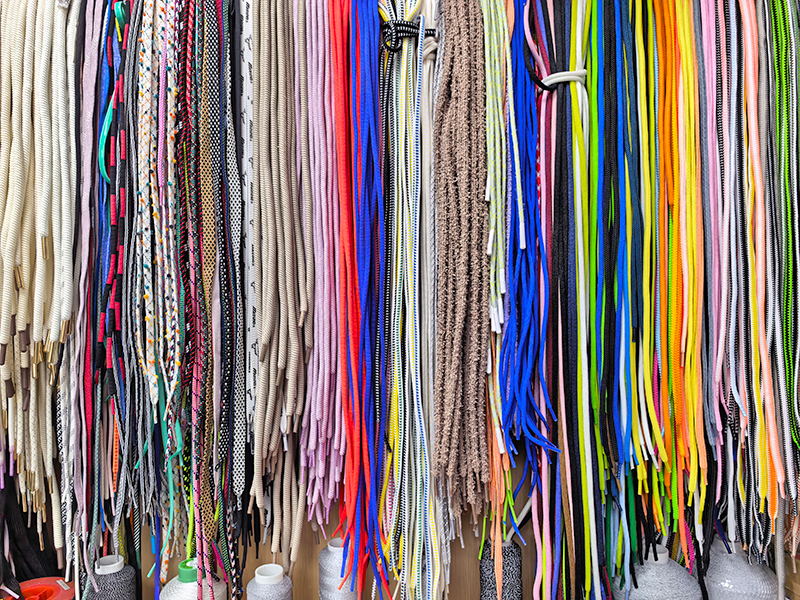
Most laces rely on friction alone, and that friction fades the moment your foot flexes or your stride shifts. These ones use a micro-ribbed texture that grips into the eyelets from both sides, so the knot isn’t doing all the work. Even when the lace itself slides slightly during a step, the ribs catch and reset before any slack can travel down to the bow.
You’ll notice it most on long walks or when you’re crouching and standing repeatedly. The usual gradual loosening just doesn’t happen, because the lace doesn’t act like a smooth cord slipping through metal or fabric holes. Instead, each eyelet pinches the ribs at a slightly different angle, creating a ratchet-like hold that only releases when you deliberately pull the lace out.
The material also matters. A low-stretch core wrapped in a slightly tacky outer layer means the lace won’t stretch under tension during the day. When you tie them in the morning, they stay at that exact tension until you untie them at night — no mid-day retying, no stopping to tighten, no loose heel slipping inside your shoe.
Aglets That Won’t Crack After Months of Daily Use
Most aglets fail at the crease, where repeated flexing turns hard plastic into a jagged split. This pair takes a different route: the inner core is a tightly braided fiber that moves with the lace instead of fighting it, while the outer layer uses a matte polyurethane that stays flexible down to freezing temperatures. After months of daily lacing, there’s no white stress marking or sharp edge poking through.
We tested these across work boots, running shoes, and even a pair of skates that see three re-laces a day. The ends still slip through eyelets without fraying, and the crimp holds the lace snug with zero cracking along the barrel. If you’re tired of replacing aglets every season, this is the set that finally keeps its shape.
One Pair That Works for Sneakers, Boots, and Everything In Between
The search for a single pair of shoes that transitions seamlessly from sneakers to boots—and everything in between—often feels like chasing a phantom. Most footwear forces you to choose: the cushioned ease of a runner or the rugged structure of a boot. But there's a quiet category that refuses to pick sides. Think of a low-profile leather trainer with a gum sole, or a chukka with a sneaker's flex. These aren't compromises; they're deliberate hybrids designed for real life.
The key lies in the silhouette and materials. A pair with a clean toe, minimal stitching, and a subdued color—like oxblood, charcoal, or saddle tan—can anchor jeans just as easily as it can soften a pair of chinos. Swap the laces from flat cotton to waxed round, and the same shoe shifts from weekend errands to a casual Friday. It's not about owning fewer shoes out of principle; it's about having one that doesn't demand a second thought when you're packing light or running late.
What makes this work isn't magic—it's proportion. A sole that's neither too chunky nor too thin, a heel that's low but present, and an upper that breathes yet holds its shape after a rainy commute. Once you find a pair that nails those details, you stop thinking in categories. Sneakers, boots, loafers—the labels blur. You just reach for the same pair, again and again, because it simply works.
Wash Them Weekly? Here’s How They Hold Their Shape
Most bras lose their shape long before the fabric wears out, and it usually comes down to how they're washed. A weekly wash is fine for everyday bras, but only if you skip the machine's regular cycle. The agitator twists cups and bends underwires, so even a single spin can leave one side sitting higher than the other. Instead, soak them in cool water with a tiny bit of gentle detergent, squeeze the suds through the cups, and rinse without wringing.
After washing, reshape the cups with your hands while they're still damp and lay them flat on a towel to dry. Hanging a wet bra by the straps stretches the elastic fast, and that's when the band starts riding up. If you have molded cups, stack them inside each other to keep the curve; if they're unlined, just smooth the fabric back into place. Giving each bra a day off between wears also lets the elastic recover, so the shape you set on wash day actually lasts through the week.
The Break-In Period Is Basically Nonexistent
Most footwear comes with an unspoken promise: suffer through the first week, and eventually they'll soften up. That's not the case here. From the very first step, the materials already feel like they've been worn for months—there's no stiff heel counter digging into your ankle, no awkward flex point fighting your foot.
Part of that comes down to how the upper is built. Instead of relying on heavy reinforcement that needs to break down, it uses thin, flexible panels that move with you right away. The interior lining also plays a role: it's smooth enough to prevent hot spots, so even the first full day doesn't leave you counting down the hours until you can take them off.
The result is a shoe you don't have to think about. You lace up, head out, and by the time you're back, there's no reminder that they're brand new. For anyone who's ever limped through a break-in period, that's a quiet kind of luxury.
FAQ
Skip anything that feels stiff or plasticky. A good everyday lace needs a bit of give so it doesn't dig into the top of your foot, but not so much stretch that it loosens by lunch. Waxed cotton or a soft polyester blend tends to work well because they slide through eyelets smoothly and hold a bow without feeling rough.
Count the eyelet pairs and use that as a starting point. Four to five pairs usually need about 36 to 45 inches, six to seven pairs around 54 inches, and boots often need 63 to 72 inches. If your shoes have wide spacing or you like a longer bow, go up a size. It's easier to tuck a slightly long lace than to fight a short one.
Flat laces usually stay tied more reliably and spread pressure over a wider area, so they feel more secure on sneakers. Round laces can slip unless they're waxed or textured, but they look sharper on dress shoes and boots. For everyday comfort, I'd lean flat, especially if you walk a lot.
Yes, it can. If a lace is too thick or too stiff, it creates a hot spot across the instep. If it's too slick, you end up overtightening to keep it from slipping, which squeezes the whole foot. A softer lace with just enough texture lets you get a snug fit without cranking down.
Polyester and nylon are the workhorses—they resist fraying, dry fast, and don't shrink. Cotton feels nice but wears out quicker, especially if you toss shoes in the wash often. A cotton-poly blend balances softness and toughness. Waxed cotton adds durability and water resistance, though it can feel a little firmer at first.
Watch for fraying near the eyelets, tips that crack or fall off, or a bow that won't stay tied even after adjusting tension. Once the fibers start to separate or the lace loses its texture, it's not doing its job. Most daily laces last six to twelve months, but that varies with how hard you are on them.
Textured or waxed flat laces have the best grip. The slight roughness creates friction that keeps the bow from working loose. Round laces, unless they're heavily waxed, tend to slide. Also, a secure knot like the surgeon's knot helps, but starting with a grippy lace is half the battle.
Check the weave density—cheap laces look loose and feel fuzzy. The tips should be solid and firmly attached, not just glued on. Even color with no blotches and consistent thickness from end to end are good signs. A quality lace also doesn't pill or shed fibers after a few days in your shoes.
Conclusion
These laces feel soft right out of the package, thanks to a fiber blend that doesn't sacrifice toughness for comfort. You can pull them tight day after day without seeing the fraying or snapping that happens with cheaper cotton pairs. The aglets—the little tips that take a beating every time you lace up—are reinforced to resist cracking, even after months of daily use. Best of all, there's really no break-in period: they bend and flex naturally from the first wear, so you forget you're even testing a new pair.
Halfway through a long day, you'll notice these laces haven't loosened on their own. The weave grabs just enough to hold the knot without making it hard to untie when you want to. Whether you swap them into running sneakers, casual boots, or anything else with eyelets, the same pair works without looking out of place. And if you toss them in the wash every week, they come out keeping their shape—no weird curling or shrinking, just flat, clean laces ready to go again.
Contact Us
Contact Person: Mr Deng
Email: [email protected]
Tel/WhatsApp: +86-18926872657
Website: https://www.uniyongfeng.com/