

Best Fan Coil Unit Options for Quiet, Efficient Home Climate Control
2026-10-27
Finding a fan coil unit that truly excels at both quiet operation and energy efficiency can be surprisingly difficult. Many models promise low noise and climate control, but few actually deliver a comfortable, peaceful home environment. That's why we've compared the top options—including shairko, a brand that's been gaining attention for its balanced performance and whisper-quiet design. Whether you're upgrading an older system or building new, the right fan coil unit can transform how your home feels and how much you pay for comfort.
What Actually Makes a Fan Coil Unit Quiet Enough for a Bedroom
Most of the noise you hear from a fan coil unit doesn't come from one obvious part—it's the combination of fan blade turbulence, motor hum, and the way vibrations travel through the housing and into the wall. In a bedroom, where background levels often sit below 30 dB(A), even a slight imbalance in the blower wheel or a cheap capacitor-start motor becomes noticeable. The quietest units tend to use electronically commutated motors that ramp smoothly instead of clicking between fixed speeds, and their fan scrolls are shaped to reduce air separation at the blade tips.
Beyond the motor and fan, installation details matter just as much as the unit itself. Flexible duct connectors, rubber isolation mounts, and lined return air plenums break the mechanical path that turns a small vibration into a low-frequency drone. Many so-called quiet fan coils fail in bedrooms not because the catalog noise rating is wrong, but because the contractor hard-mounts the chassis to studs or uses rigid metal duct right off the collar. A properly isolated unit running on its lowest setting can be effectively inaudible—assuming the grille area is sized so air velocity stays under about 300 feet per minute.
There's also a thermal comfort angle that gets overlooked. If a room has a single fan coil cycling at a higher speed to meet load, the start-stop pattern and the rush of air become more noticeable than a constant low hum. Oversizing a fan coil for a bedroom often makes it louder in practice, even if the unit's published sound power looks fine. Choosing a model with a wide modulation range—and pairing it with a thermostat that lets the fan stay on low rather than blasting periodically—usually does more for perceived quietness than chasing the lowest decibel number on paper.
Efficiency Ratings That Show Up on Your Utility Bill—Not Just a Spec Sheet
You can stare at a spec sheet all day and still not know how an air conditioner will actually treat your monthly budget. The only efficiency rating that genuinely matters is the one that shows up on your utility bill after a full season of use. Real-world performance depends on how well the unit handles your specific home's layout, insulation, and local climate—not just a lab-tested number printed on the box.
What you want to watch is your energy consumption pattern before and after installation. A truly efficient system will lower your cooling costs without forcing you to sacrifice comfort. If your bill barely moves or you find yourself cranking the thermostat lower just to feel cool air, the equipment isn't delivering the efficiency it promised. Pay attention to how often the compressor cycles, how long it runs, and whether certain rooms stay consistently comfortable.
The most honest rating comes from tracking kilowatt-hours used per cooling degree day over several billing periods. That figure tells you exactly how much electricity you're paying for the comfort you actually receive. Any brand can print a high SEER or EER number, but your utility company's meter will reveal the truth about whether that rating translates into real savings.
Ducted vs. Ductless Fan Coil Units: A Practical Comparison Without the Jargon
Choosing between a ducted and a ductless fan coil unit often comes down to how your space is already set up. If you have existing ductwork, a ducted unit can slip into that system almost invisibly, using the same air pathways to heat or cool multiple rooms from a single location. The unit itself usually sits in a ceiling void or a dedicated closet, so the only thing you notice is a grille. It's a natural fit for renovations where you don't want to disturb walls or for larger zones that need consistent airflow from one central point.
Ductless units, on the other hand, skip the air channels entirely. Each indoor unit mounts directly on a wall, floor, or ceiling in the room it serves, connecting to an outdoor condenser through a small refrigerant line. That means no ducts to clean, no leaks to chase, and no energy lost as air travels through unconditioned spaces. You give up the hidden look, but you gain room-by-room control: a bedroom can stay cool while the living room runs warmer, and shutting off an unused space actually saves real money on your bill.
The practical trade-off is between installation complexity and long-term flexibility. Ducted systems often require more invasive work upfront and tend to be less forgiving if you later rearrange your floor plan. Ductless units are easier to retrofit into older homes or additions, but you'll see them on the wall, and each space needs its own indoor fan coil. Neither is universally better; it really depends on whether your priority is hiding the hardware or tuning the comfort room by room.
Compact Fan Coil Units That Fit Tight Spaces and Realistic Budgets
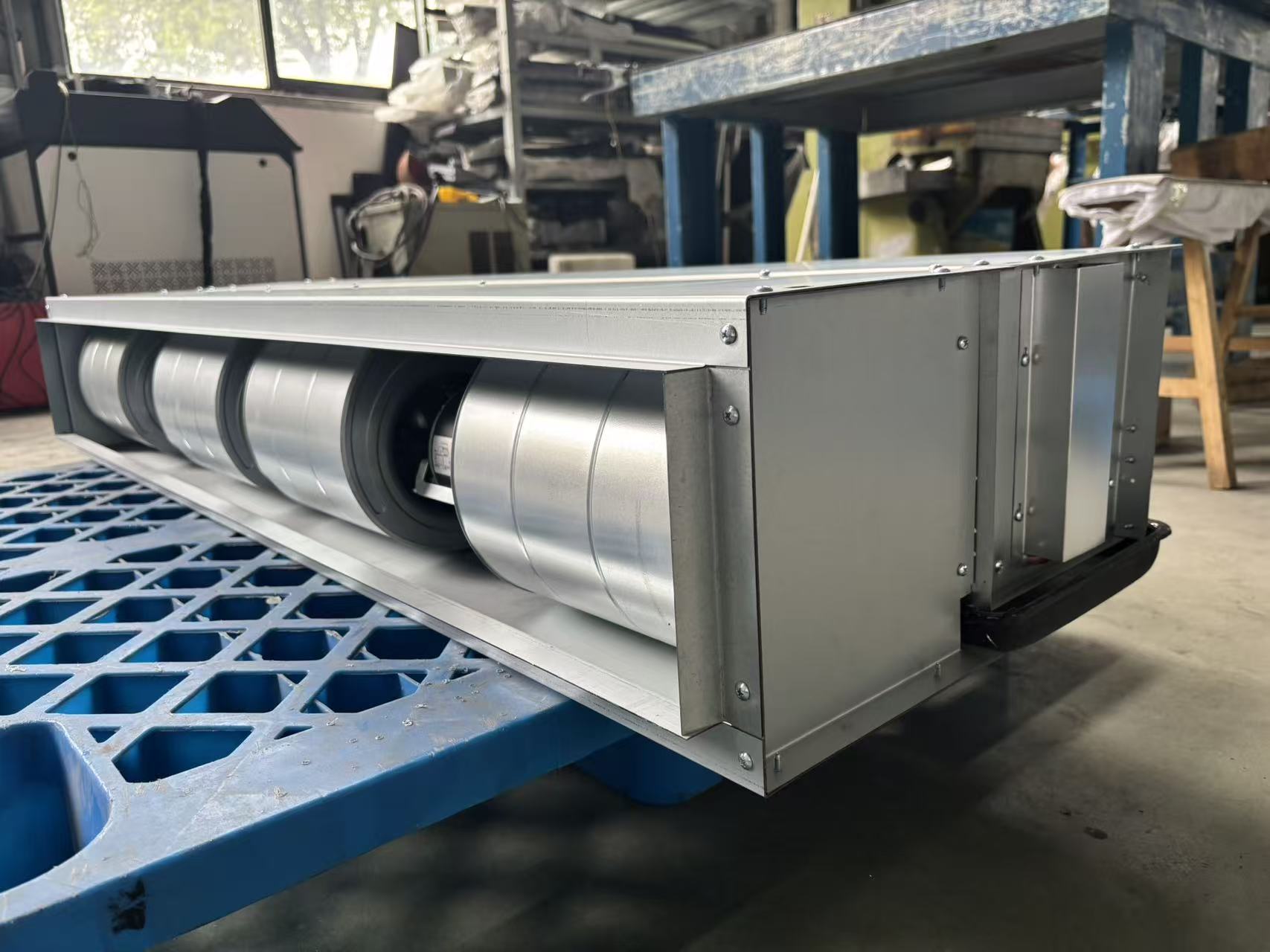
Finding a fan coil unit that doesn't demand a dedicated mechanical room can feel like a losing battle, especially when the ceiling cavity is already crowded with ducts, conduit, and fire suppression lines. Compact models built with low-profile cabinets and rear or bottom pipe connections slip into spaces other units can't touch, leaving enough clearance for filters, valves, and the occasional maintenance wrench. That slim footprint isn't about compromise—it's about making the most of every inch without turning the installation into a geometry puzzle.
Budget realities rarely line up with glossy spec sheets, but a compact fan coil doesn't have to mean flimsy. Look for units with galvanized steel casings, insulated drip pans, and ECM motors that sip power instead of gulping it. Those choices trim operating costs over the long haul, which matters more than a flashy touchscreen. The real win is a unit you can actually afford to stock for replacements, not one that requires a custom order and a six-week lead time every time a tenant calls about a noisy blower.
Installers tend to grumble when a "compact" unit still needs four hands and a pry bar to get into place. A genuinely tight-space design offers hinged access panels, tool-free filter pulls, and controls that face the service side without a mirror. When the unit tucks neatly above a closet or behind a bulkhead, the job looks clean—and the next service visit won't start with removing ceiling tiles just to find the serial number.
Smart Controls and Scheduling Tricks That Cut Both Noise and Energy Use
Most people don't realize how much energy gets wasted simply because their devices run at full blast when nobody needs them to. The trick is to lean on smart thermostats, variable-speed fans, and occupancy sensors that dial things back automatically. Instead of blasting the AC all afternoon, you can program it to ease off while you're out and then cool only the rooms you actually use. That not only trims your monthly bill but also keeps the constant hum of a hard-working compressor from becoming background noise in your life.
Scheduling makes a bigger difference than you'd expect, especially with equipment that tends to drone on. If you have a dehumidifier or an air purifier, running it during off-peak hours—say, late at night or early morning—lets it do its job when you're less likely to notice the sound. Pair that with a smart plug that shuts the unit off once humidity or air quality hits a target, and you avoid the pointless racket of a machine churning through air that's already fine. Small tweaks like this stack up, both in decibels and dollars.
One underrated approach is to use scheduling as a form of noise control rather than just energy management. For example, a heat pump water heater can be set to run only during the warmest part of the day, which makes it more efficient and less likely to kick on at midnight when the house is silent. The same logic applies to whole-house fans or attic ventilators. By syncing their operation with natural temperature swings and your own daily rhythms, you get the comfort you need without the constant mechanical backdrop that slowly wears you down.
Contractor Secrets for Installing Fan Coil Units That Stay Quiet for Years
Most noise complaints trace back to how the unit is hung, not the unit itself. We use spring isolators on all four corners and check that the threaded rods are plumb before tightening. If the cabinet twists even slightly, the fan wheel can brush the housing under load. We also keep a 3/8-inch gap between the cabinet and any drywall or framing so vibration doesn't telegraph into the wall cavity.
Airflow noise is just as important as mechanical vibration. Instead of relying on flex duct right at the unit, we start with a short metal transition and keep the first elbow at least two feet away. This reduces turbulence and lets the fan operate closer to its design curve. The fan speed taps are set during commissioning, not left on high from the factory, because a unit moving too much air through undersized registers will always rumble.
Finally, the condensate line can create a steady dripping or gurgling if it isn't trapped and sloped correctly. We install a deep trap that matches the fan's static pressure and slope the drain a quarter inch per foot, with a cleanout at the end. A quiet unit is about the details you don't see after the ceiling goes back up.
FAQ
A fan coil unit is a compact terminal device that uses a heat exchanger coil and a fan to condition the air in a specific zone or room. It receives hot or chilled water from a central boiler or chiller, then blows room air across the coil to adjust the temperature. In homes, these units are often installed in ceilings, walls, or floor-mounted cabinets to provide localized heating or cooling without needing extensive ductwork.
Quiet models typically feature electronically commutated motors, insulated cabinet liners, and carefully shaped fan blades to reduce turbulence. Look for units with a published sound power level below 35 dB(A) at low speed, and check if the manufacturer offers a dedicated low-noise or night mode. Brands that focus on hospitality or bedroom installations often provide the most detailed acoustic data, making it easier to compare before buying.
Start by matching the unit's capacity to the room's actual load rather than oversizing, since oversized units cycle frequently and waste energy. Prioritize models with EC motors and multi-speed or variable-speed controls, because they adjust airflow to match real-time demand. Also examine the coil's heat transfer design, as a larger or microchannel coil can deliver the same comfort with lower water flow and pump energy.
Yes, mounting the unit away from areas where people sit or sleep and isolating it from rigid structural framing makes a noticeable difference. Use vibration isolation mounts and flexible duct connections to prevent motor vibration from transferring into walls or ceilings. Placing a return air plenum with acoustic lining also absorbs fan noise before it enters the occupied space.
Clean or replace air filters every one to three months, since dust buildup forces the fan to work harder and increases noise. Inspect the coil fins annually and gently remove debris with a soft brush or low-pressure air, avoiding bent fins that restrict airflow. Check the condensate drain pan and line for blockages, and listen for bearing wear in the fan motor so you can lubricate or replace parts before they become noisy.
Absolutely, fan coil units are well suited to low-temperature hydronic systems driven by air-to-water or ground-source heat pumps. Because these units can deliver comfortable heating with water temperatures as low as 95–110°F, they pair efficiently with heat pump output. When combined with solar thermal panels or a photovoltaic-powered heat pump, the overall system can significantly reduce fossil fuel consumption.
Select a unit with an integrated digital thermostat and a modulating water valve, not just a simple on/off control. Many modern fan coils accept room sensors and can be programmed to maintain a setpoint within one degree Fahrenheit by varying fan speed and water flow together. Some models also support building automation protocols like Modbus or BACnet, which allows fine-tuning through a home automation system.
Fan coil units provide zone-level control, so you can heat or cool only occupied rooms instead of conditioning the entire house at once. They typically run quieter than a central furnace or air handler because the fan is smaller and closer to the conditioned zone. However, they require a hydronic distribution system, which adds upfront plumbing cost, but the long-term energy savings and comfort customization often outweigh that initial investment.
Conclusion
A genuinely quiet fan coil unit for a bedroom isn't just about a low decibel number on a brochure. The motor technology matters most—brushless DC (ECM) motors run noticeably smoother and can ramp down to a whisper during night setbacks, while the fan wheel design and cabinet insulation prevent high-frequency whine. Look for models with insulated drain pans and flexible duct connectors if you're using any ductwork, because metal-to-metal contact transmits vibration. Efficiency claims like high EER or COP sound impressive, but the real test is whether the unit can modulate output to match partial loads. Units that only run at full blast tend to cycle frequently, which spikes your utility bill and creates temperature swings. Ducted systems hide the noise in a closet but often leak air; ductless high-wall units are simpler to install but the fan is right in the room, so fan quality becomes non-negotiable. Compact horizontal or vertical chassis units can slip into a closet or soffit and still deliver surprising comfort without eating your budget.
Smart controls have changed what's possible: instead of leaving the fan on constant speed, you can schedule lower airflow during sleep hours or tie operation to occupancy sensors, cutting both energy use and audible hum. Some units let you cap the maximum fan speed in a bedroom while boosting it briefly during morning warm-up. But even the best hardware underperforms if installation is sloppy. Experienced contractors isolate the chassis with rubber pads, size the condensate drain with a proper trap to avoid gurgling, and set fan speed jumpers correctly instead of leaving factory defaults. They also check static pressure in ducted setups—too much back pressure makes the fan strain and grow louder over time. A few years of quiet operation comes down to clean filters, coil cleaning, and occasionally re-tightening panel screws. Skip those routine details and the unit that started out as a library hush turns into a rattling nuisance.
Contact Us
Contact Person: Crystal
Email: [email protected]
Tel/WhatsApp: 8613524235353
Website: https://www.airkohvac.com