

10 Leading Grinding Machine Manufacturers Transforming Industrial Precision
2026-05-19
Precision grinding is the unsung hero behind countless high-stakes industries, from aerospace to medical devices. Yet finding the right machine builder can feel overwhelming. In this post, we spotlight 10 manufacturers reshaping what’s possible, including WINNRUI CNC, a name gaining traction for its innovative approach to accuracy and durability. Whether you're upgrading a production line or exploring new capabilities, you'll discover the technologies driving the next wave of industrial precision.
Precision Redefined: How Top Grinding Machine Makers Are Pushing Limits
In the world of high-precision manufacturing, the pursuit of tighter tolerances never really stops. Today’s leading grinding machine builders are moving beyond incremental improvements, adopting radical approaches that blend mechanical innovation with adaptive control systems. They’re rethinking core machine geometry, favouring hydrostatic guideways over traditional linear bearings, and integrating direct-drive torque motors that eliminate backlash entirely. The result is a new breed of grinders capable of holding sub-micron accuracy day in, day out, without constant manual intervention.
Thermal stability has become a battleground in its own right. Top engineers understand that even a fraction of a degree shift can distort a workpiece. Modern grinders now feature active cooling circuits snaking through the bed, column, and spindle housing, all managed by algorithms that predict and counteract thermal growth before it affects the grind. Gone are the days of waiting hours for a machine to warm up; these systems maintain a near-constant thermal equilibrium, slashing scrap rates and boosting throughput in high-mix, low-volume production environments.
What truly sets the leaders apart is their willingness to challenge conventional workflows. They’re embedding laser measurement systems directly into the grinding zone, enabling in-process corrections at speeds unimaginable a decade ago. Some are even experimenting with ultrasonic-assisted grinding for ceramics and other brittle materials, achieving surface finishes that once required secondary polishing. This isn’t just about selling machines—it’s about redefining what’s possible when precision becomes an obsession rather than a specification.
Beyond the Grind: Innovations Shaping Modern Manufacturing
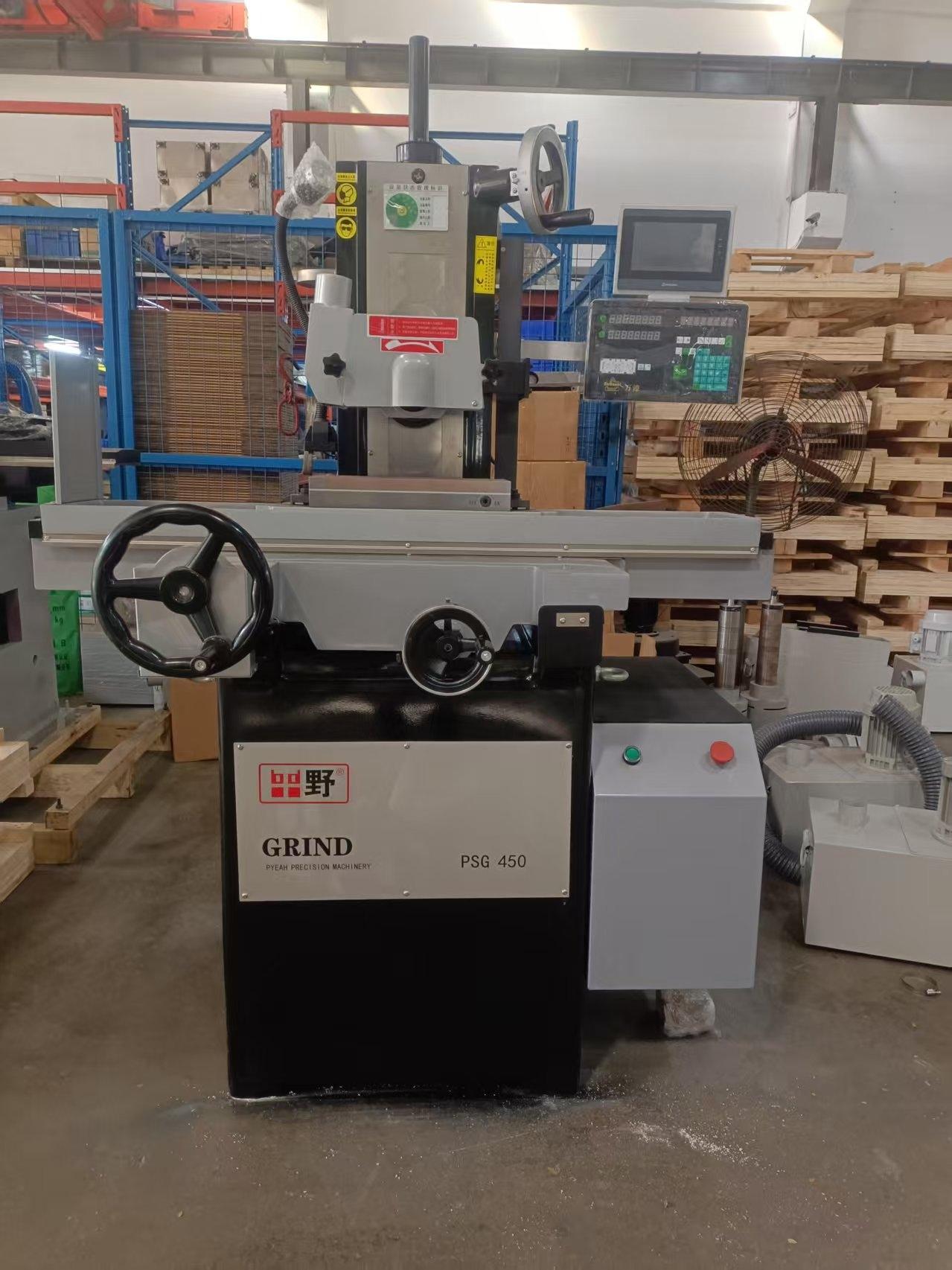
Modern manufacturing has quietly shed its old skin of repetitive manual labor. In its place, a web of intelligent sensors and machine learning algorithms now orchestrates production lines with a precision that would've seemed like wizardry a decade ago. The real shift isn't just about machines taking over—it's how they learn from each hiccup, anticipate breakdowns, and self-correct without a human ever hitting pause.
Take cobots, for instance. They're not the cage-bound robots of the past; these work shoulder-to-shoulder with people, handling the monotonous lifting while leaving the nuanced decisions to human minds. Alongside them, additive manufacturing has turned prototyping from a weeks-long ordeal into an afternoon affair, letting engineers iterate with a freedom that's remaking entire supply chains. Digital twins add another layer, letting a factory simulate every belt turn and temperature shift before a single piece of metal gets bent.
Then there's the quieter push toward circular production methods. Rather than just chasing efficiency, plants are now designing waste out of the equation, using real-time resource tracking to close loops that once leaked materials and money. It's a recalibration that's making manufacturing not only smarter but genuinely more aligned with a planet that won't accept endless extraction.
From Microns to Masterpieces: The Art of Industrial Precision
Precision in modern industry starts at a scale almost invisible to the human eye. A micron—one-thousandth of a millimeter—can define the difference between flawless performance and catastrophic failure. In fields like semiconductor fabrication or aerospace engineering, tolerances are measured in microns, yet the outcomes stretch across continents. The gleaming turbine blades of a jet engine, the silent swipe of a smartphone screen, all trace back to rooms where temperature drafts and dust particles are controlled with obsessive care. It’s a dance of mathematics and material, where every cut, polish, and measurement is a deliberate act of restraint and control.
But technical exactness alone doesn’t capture the soul of the process. There’s an artistry in seeing a block of raw metal or silicon and knowing, through years of intuition, how to bring out its potential. The hum of a perfectly balanced motor, the seamless curve of a medical implant, the way light catches a lens element—these aren’t just engineering outcomes. They’re crafted statements, where rigid standards meet human insight. The path from a micron’s precision to a finished masterpiece isn’t a sterile assembly line. It’s a dialogue between tool and maker, where each adjustment echoes a commitment to something almost impossible, made real by hands and minds that refuse to settle.
The Silent Revolution: Advanced Grinding Technologies in Action
Grinding, once considered a rough, noisy process, has undergone a quiet transformation. Modern advances have turned it into a precise, almost silent operation that shapes components with micron-level accuracy. This shift isn't just about quieter machines; it's a fundamental change in how materials are removed, reducing waste and energy use while boosting surface quality.
Behind the scenes, smart sensors and adaptive controls now monitor every second of the grind, adjusting speed and pressure in real time. New abrasive grains, like engineered ceramics, cut with surgical precision and last far longer than traditional wheels. These innovations mean less vibration, less heat, and ultimately, parts that require little to no finishing work.
Factories embracing these technologies are seeing dramatic gains. Aerospace turbines, automotive transmissions, and even medical implants benefit from smoother finishes and tighter tolerances. The silent revolution isn't just reshaping metal—it's quietly redefining what's possible in manufacturing, one grind at a time.
Crafting Perfection: Profiles of Industry-Leading Manufacturers
True manufacturing excellence isn’t born from mass production—it’s forged in the relentless pursuit of perfection. The industry’s most respected names don’t just assemble products; they engineer experiences, immersing themselves in every nuance of material, function, and form. These manufacturers see each component as a piece of a larger narrative, where millimeter-precise tolerances and hand-finished surfaces tell a story of obsession. Their facilities blend advanced robotics with stations where seasoned craftspeople apply techniques perfected over decades, creating a symbiosis that machines alone cannot replicate.
Quality at this level is never an accident. It emerges from ecosystems of accountability where every raw material is traced back to its source and every production step is monitored against internal benchmarks that far exceed industry standards. In these environments, a single microfracture in a weld or a 0.1-millimeter variance in alignment isn’t just a defect—it’s a puzzle that triggers cross-team collaboration until the root cause is unearthed. Prototyping cycles stretch into months, not because of inefficiency, but because each iteration is a canvas for refinement. The result is a product line where consistency feels like an understatement, and durability is so deeply ingrained it rarely needs to be advertised.
Beyond the machinery and metrics lies a cultural signature: a quiet pride that turns every employee into a custodian of the brand’s reputation. On these manufacturing floors, you’ll find engineers debating the acoustic properties of a hinge, or finishing specialists who treat surface texture like a language. This mindset cascades from leadership that champions long-term craftsmanship over short-term margins, investing in apprenticeship programs that safeguard vanishing skills. It’s why their products don’t just outperform counterparts—they endure. And it’s why, when the market shifts or competitors cut corners, these manufacturers don’t merely adapt; they redefine what customers believe is possible.
The Future of Fabrication: Trends Set by Premier Grinder Brands
Premier grinder brands are reshaping the future of fabrication by integrating smart technologies that bring precision and adaptability to the forefront. Advanced grinders now feature real-time monitoring systems, which adjust grinding parameters on the fly to maintain consistency even with varying material batches. This shift toward intelligent automation not only reduces human error but also enables fabricators to achieve tighter tolerances and faster cycle times, setting a new standard for efficiency in high-stakes industries like aerospace and medical device manufacturing.
Another clear trend is the move toward modularity and versatile design. Leading brands are engineering grinders that handle multiple materials—from hardened steels to advanced composites—without requiring extensive retooling. This flexibility allows shops to diversify their services quickly, responding to demand for smaller, customized production runs. Pair this with intuitive, user-centric interfaces, and operators can switch between complex jobs with minimal training, fundamentally changing how smaller fabricators compete with large-scale operations.
Sustainability has also emerged as a driving force, with premier grinder brands pioneering eco-conscious innovations. New models are built to minimize waste through precision coolant delivery and energy-recovery systems that recycle kinetic energy from the grinding process. By reducing consumable usage and lowering power draw, these machines not only cut operational costs but align with stricter environmental regulations, proving that high-performance fabrication and environmental stewardship can go hand in hand.
FAQ
True leadership isn't just about sales volume – it's the ability to repeatedly deliver sub‑micron tolerances under high‑volume production conditions. These ten manufacturers have earned that status through decades of in‑house spindle engineering, closed‑loop thermal compensation, and vibration‑damped machine bases that rival laboratory‑grade metrology frames.
Several have pioneered hydrostatic guideways that eliminate metal‑to‑metal contact, while others embedded AI‑driven wheel‑wear compensation that adjusts dressing intervals in real time. One standout innovation is the integration of direct‑drive rotary axes, which slashes indexing error to less than ±1 arc‑second in gear grinding cells.
Some, like Junker and Studer, focus heavily on thermal symmetry – placing motors, hydraulics, and coolant systems to cancel out heat distortion. Others, such as ANCA and Rollomatic, prioritize modular software platforms that let users craft custom grinding cycles from a library of validated kinematics, essentially turning the machine into a dedicated special‑purpose tool without hardware changes.
It's no longer an add‑on; it's embedded from the concept stage. Pallet changers, in‑machine gauging, and robotic deburring are orchestrated by adaptive CNC that measures every part and auto‑offsets to stay within spec for thousands of lights‑out cycles. A few have gone further with digital twin simulation, letting operators prove out a new process without wasting a single blank.
For carbide tool grinding, the top builders employ high‑pressure coolant delivered through the spindle at 20–80 bar, combined with fully enclosed guarding that captures mist and dust. Some use laser‑assisted dressing on metal‑bond diamond wheels, allowing in‑process truing without tearing down the setup – a huge productivity gain when dealing with sub‑10‑micron corner radii.
Because grinding is often the last material‑removal operation; there's no rework if a dimension drifts. In‑process gauging – whether it's a touch probe, an acoustic sensor listening for wheel contact, or a laser micrometer scanning the diameter during the cycle – constantly feeds data to the control. The best systems log every measurement to a SQL database, enabling traceability compliant with aerospace and medical regulations.
The leading names don't just ship a machine and a manual; they offer application‑specific process development, often running customer parts in their own grinding labs before delivery. Remote diagnostics via encrypted VPN tunnels are standard, and several have field‑service apps that overlay augmented‑reality annotations on a live camera feed, guiding a plant technician through unexpected maintenance in real time.
Electrification is a quiet revolution – replacing hydraulic actuators with servo‑electric ballscrews and torque motors not only saves energy but greatly improves response and reduces fluid contamination. Another clear direction is machine‑to‑machine connectivity: grinding cells that automatically fetch the next job file from an ERP system, adjust feeds based on the batch material certificate, and report wear trends to a central maintenance scheduler.
Conclusion
Precision grinding has entered a new era where micron-level accuracy is no longer aspirational but standard. The most forward-thinking manufacturers are redefining what’s possible by integrating adaptive control systems and real-time measurement feedback, ensuring that every pass of the wheel translates into flawless surface finishes. From aerospace alloys to micro-surgical tools, these ten leaders are pushing boundaries not just through tighter tolerances but by making such precision reliably repeatable across high-volume runs. The quiet sophistication of their designs hides the immense complexity underneath—hydrostatic spindles, vibration-damping structures, and thermal stabilization that collectively turn raw billets into masterpieces of engineering consistency.
Beyond incremental improvements, these companies are shaping the future of fabrication with deeply integrated automation and process intelligence. Multi-axis grinding centers now blend grinding with milling and measurement in a single setup, slashing cycle times while elevating part quality. Innovations like laser-assisted grinding and AI-driven tool wear prediction are moving the industry from reactive to proactive manufacturing. Behind each machine stands a distinct philosophy—some prioritize extreme rigidity for heavy stock removal, others marry speed with nanotechnology surfaces. Together, these profiles reveal a landscape where the art of industrial precision meets the silent revolution of digitization, setting trends that will influence how components are made for decades to come.
Contact Us
Contact Person: Tim
Email: [email protected]
Tel/WhatsApp: +86 15522553731
Website: https://www.winnrui-cnc.com/